




What's Happening?
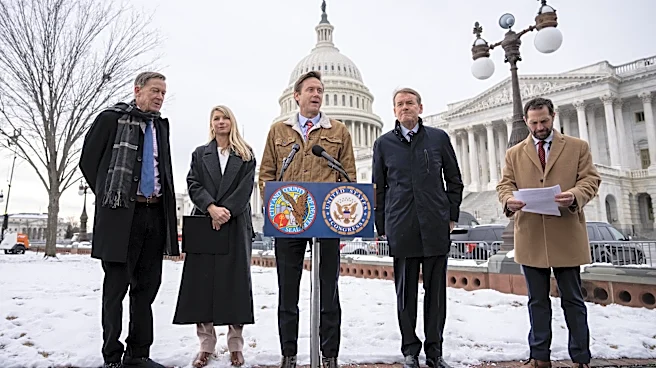
The U.S. Senate has unanimously passed the Weather Research and Forecasting Innovation Reauthorization (WEATHER) Act of 2026, which includes U.S. Sen. Katie Britt's bipartisan Water Research Optimization Act of 2025. This legislation aims to modernize
weather forecasting and research, specifically by streamlining and enhancing hydrological forecasting. A key provision of Britt's bill is the codification of the National Water Center in Tuscaloosa, Alabama, as the primary hub for coordinating flood forecasting and model development across various federal agencies. The act also places the National Weather Service’s 13 River Forecast Centers under the direct supervision of the Office of Water Prediction, ensuring their operations are coordinated with the National Water Center. Additionally, the bill codifies the National Oceanic and Atmospheric Administration’s (NOAA) Cooperative Institute for Research in Operations to Hydrology (CIROH), located at the University of Alabama, to provide long-term stability for its critical research in areas like hurricane intensity forecasting, drought monitoring, and storm surge prediction. The bill now moves to the U.S. House of Representatives for consideration.
Why It's Important?
This legislation is crucial for strengthening the nation's resilience against water-related disasters, which pose significant and costly threats across the United States. Flooding, in particular, causes an average of $8 billion in damages annually and is responsible for more fatalities than any other weather hazard. By codifying the National Water Center and enhancing coordination among federal agencies, the act aims to improve the accuracy and efficiency of flood forecasting, thereby helping communities better prepare for and mitigate the impacts of floods, droughts, and severe weather. The formalization of CIROH also ensures continued advanced research in hydrology, which is vital for developing more effective predictive models. This initiative underscores a bipartisan commitment to investing in infrastructure and scientific capabilities that directly protect American lives and property, reducing economic losses and enhancing public safety nationwide.
What's Next?
Following its unanimous passage in the Senate, the Weather Research and Forecasting Innovation Reauthorization (WEATHER) Act of 2026, including Senator Britt's Water Research Optimization Act, will now proceed to the U.S. House of Representatives for consideration. For the bill to become law, it must pass the House and then be signed by the President. Senator Britt has urged the House to take up the bill without delay, emphasizing the urgency of strengthening the nation's water forecasting capabilities. If passed by the House and enacted, the legislation will lead to the formal establishment of the National Water Center as a central coordinating body and provide long-term operational certainty for hydrological research institutions like CIROH. This will likely result in increased federal investment and focus on water prediction technologies and inter-agency collaboration, ultimately improving the nation's ability to respond to water-related hazards.
Beyond the Headlines
The passage of the Water Research Optimization Act signifies a broader recognition of the escalating challenges posed by climate change and extreme weather events. By centralizing and enhancing water forecasting capabilities, the U.S. is moving towards a more proactive rather than reactive approach to disaster management. This legislative action could set a precedent for future federal initiatives aimed at bolstering national infrastructure and scientific research in response to environmental threats. Furthermore, the codification of research centers like the National Water Center and CIROH highlights the critical role of academic institutions in national security and public safety, fostering stronger partnerships between government and academia. This long-term investment in hydrological science could also spur innovation in related fields, leading to advancements in water resource management, urban planning, and agricultural practices, all of which are vital for sustainable development and economic stability in the face of a changing climate.