
What's Happening?
Hurricane Melissa, a category 5 storm, made landfall in Jamaica on October 28, 2025, causing widespread destruction. The storm displaced tens of thousands of people and damaged over 100,000 structures.
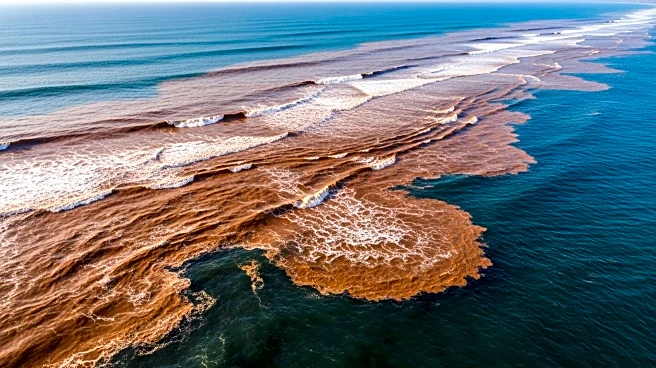
In addition to the human and infrastructural impact, the hurricane created a significant natural oceanographic event. As the storm moved over the Caribbean Sea, it stirred up sediment from the Pedro Bank, a carbonate platform south of Jamaica. This resulted in a bright blue plume visible from space, captured by NASA's Terra satellite on October 30, 2025. The event is considered a once-in-a-century occurrence, with sediment spread over an area more than three times the size of Jamaica.
Why It's Important?
The sediment stirring event caused by Hurricane Melissa has significant implications for understanding oceanic processes and the global carbon cycle. The suspension of carbonate sediments can lead to long-term carbon sequestration in deeper ocean layers, impacting the planet's carbon balance. This natural experiment provides researchers with a unique opportunity to study sediment transport and its effects on marine ecosystems. The event also highlights the potential for hurricanes to alter oceanic environments significantly, affecting marine life and the physical characteristics of underwater landscapes.
What's Next?
Researchers will continue to analyze data from the event to better understand the physical, geochemical, and biological processes involved. The insights gained could improve models of sediment transport and carbon cycling in ocean systems. Additionally, the event underscores the need for ongoing satellite monitoring to capture and study such rare occurrences. Future research may focus on the recovery of the benthic ecosystem on Pedro Bank and the long-term impacts of sediment resuspension on marine biodiversity.
Beyond the Headlines
The event at Pedro Bank serves as a reminder of the interconnectedness of atmospheric and oceanic systems. It also raises questions about the resilience of marine ecosystems to extreme weather events, which are expected to increase in frequency and intensity due to climate change. Understanding these dynamics is crucial for predicting and mitigating the impacts of future storms on both human and natural environments.