





What's Happening?
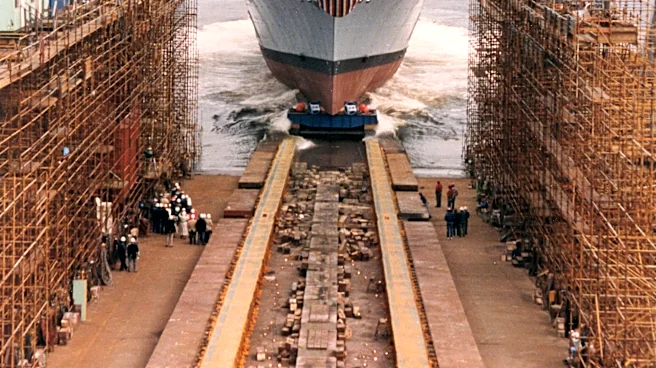
U.S. shipyards are experiencing a significant decline, marked by extended construction times for naval vessels and a shortage of deployable ships. The Congressional Budget Office (CBO) reports that destroyers and attack submarines, which once took five
to six years to build, now require nine to ten years. This decline is attributed to decades of policy shifts, high labor and material costs, and the collapse of the commercial shipbuilding ecosystem after the end of construction differential subsidies in 1981. The U.S. currently has only nine major shipyards capable of naval construction, four of which are public and five are owned by major defense contractors. These facilities often rely on outdated equipment, and the industry struggles with an aging workforce and difficulties in recruiting new skilled labor. Approximately 82% of new U.S. warships and submarines are behind schedule due to industrial decay, workforce shortages, design changes, and fragile supply chains. The Trump administration has proposed a 'Golden Fleet,' but the current industrial base is unlikely to meet such demands on schedule.
Why It's Important?
The deterioration of U.S. shipbuilding capabilities poses a critical threat to national security and the Navy's ability to maintain global power projection, especially amid rising great-power competition with nations like China. The inability to build and maintain warships efficiently leads to a shortage of deployable vessels, potentially compromising the U.S. Navy's operational readiness and strategic objectives. The reliance on outdated facilities and a shrinking skilled labor pool further exacerbates these issues, making it difficult to modernize the fleet. The potential for foreign partnerships, such as those with South Korea, could introduce advanced manufacturing technology, production expertise, and investment capital, which are crucial for revitalizing the U.S. defense industrial base. However, the long-term impact of these partnerships on production delays remains uncertain, and the underlying issues of 'Design Creep' and supply chain fragility still need to be addressed to ensure sustainable naval power.
What's Next?
The U.S. Navy is exploring various strategies, including the 'Finland Model,' which allows foreign allied shipyards to construct initial vessels of an approved class overseas to accelerate delivery, provided subsequent production transitions to the U.S. A Presidential Memorandum in August expanded this framework to include light surface combatants, strategic sealift vessels, and replenishment tankers. South Korean shipbuilders like Hanwha and HD Hyundai are already expanding their U.S. operations, with Hanwha acquiring the Philadelphia shipyard and securing a U.S. Navy contract for Medium Landing Ships. HD Hyundai is also exploring ventures with Kiewit and Huntington Ingalls Industries for automated welding technology. The U.S. Navy plans to evaluate foreign ship designs and construction options by November 12, tied to the Finland model outlined by President Trump. However, significant obstacles remain, including potential restrictions from the U.S. House of Representatives on foreign warship construction and uncertainties in Pentagon procurement plans.
Beyond the Headlines
The decline in U.S. shipbuilding reflects a broader erosion of the nation's industrial base, with long-term implications for economic resilience and technological leadership. The collapse of commercial shipbuilding not only impacted naval capabilities but also decimated the domestic supply chain, including steel mills, component manufacturers, and a deep pool of skilled tradespeople. This loss of industrial capacity makes the U.S. more vulnerable to global supply chain disruptions and less self-reliant in critical defense sectors. The ethical and strategic implications of relying on foreign partners for core defense capabilities also warrant consideration, as it could create dependencies and potential vulnerabilities in times of geopolitical tension. Addressing these issues requires a comprehensive national industrial strategy that includes significant investment in infrastructure, workforce development, and a renewed commitment to domestic manufacturing to rebuild a robust and competitive shipbuilding ecosystem.