



What's Happening?
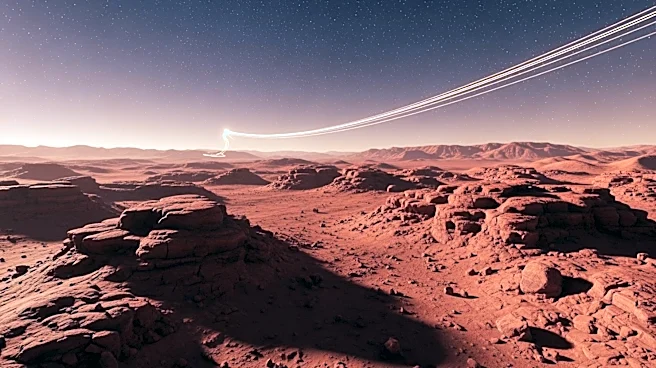
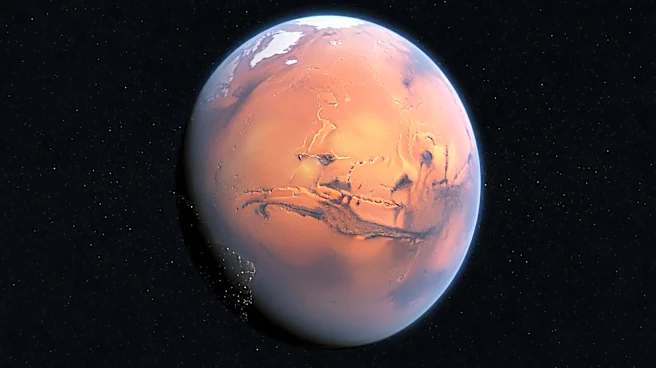
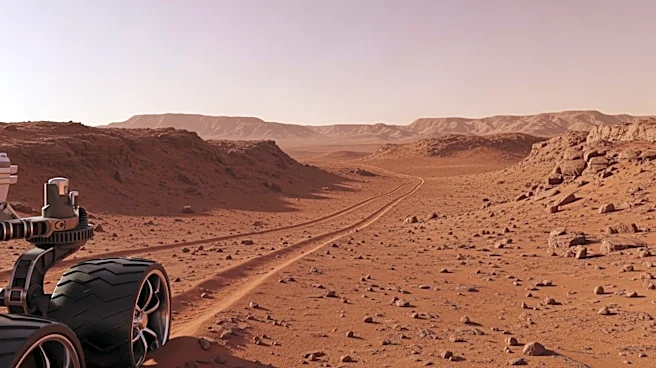
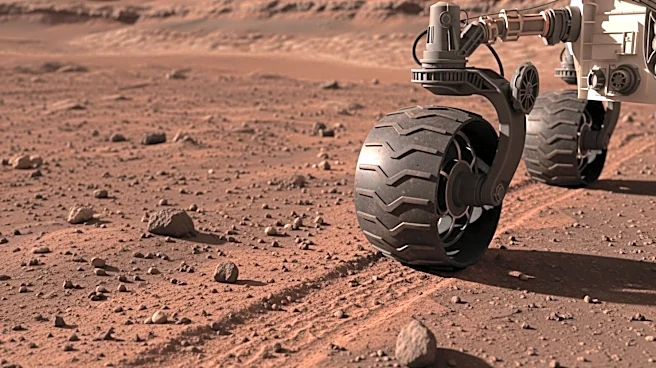
NASA's Curiosity Rover has discovered seven new organic, carbon-based molecules on Mars, adding to the evidence that the planet once had conditions suitable for life. The discovery was made from a rock sample drilled in 2020 from the lower slopes of Mount
Sharp, an area that once contained lakes and streams. Among the newly identified molecules is a nitrogen heterocycle, a structure that on Earth is involved in forming RNA and DNA. This finding is significant as it suggests the presence of chemical precursors to more complex nitrogen-bearing molecules. The rover's onboard laboratory, Sample Analysis at Mars (SAM), played a crucial role in analyzing the rock samples, revealing a diverse array of organic molecules despite the harsh Martian environment.
Why It's Important?
The discovery of these organic molecules is crucial as it strengthens the hypothesis that ancient Mars had the right chemistry to support life. While it does not confirm the existence of life, it suggests that the planet had water and organic molecules that survived for billions of years. This finding is significant for astrobiology and the search for life beyond Earth, as it provides insights into the potential habitability of Mars in its ancient past. The presence of nitrogen heterocycles, which are chemical precursors to more complex molecules, indicates that Mars might have had the necessary ingredients for life, similar to early Earth conditions.
What's Next?
Future missions to Mars will likely build on these findings, with more advanced instruments designed to further explore the planet's surface and subsurface for signs of past life. The European Space Agency's Rosalind Franklin rover and NASA's Dragonfly mission to Saturn's moon Titan are expected to carry similar instruments to those used by Curiosity, allowing for more detailed chemical analyses. These missions aim to uncover deeper chemical layers and potentially more complex organic compounds, enhancing our understanding of the chemical processes that may have occurred on Mars and other celestial bodies.