



What's Happening?
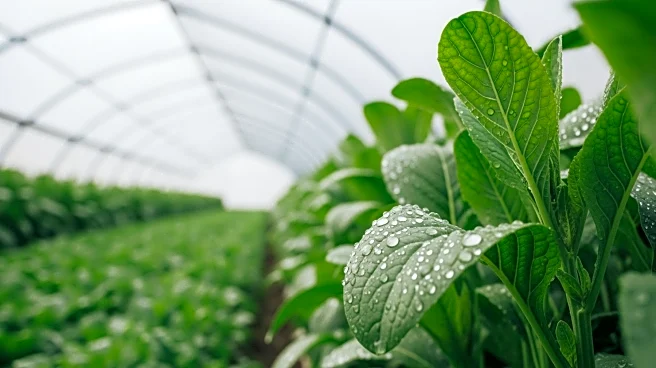
Kentucky Fresh Harvest, a small farm in Stanford, Kentucky, is making strides in the field of protected agriculture by growing grape tomatoes year-round in greenhouses. The company has spent a decade refining its indoor farming model and has been working
to distinguish itself from other high-tech agricultural ventures like AppHarvest, which filed for bankruptcy in 2023. Dr. Shubin Saha, the Chief Operating Officer, oversees the greenhouse operations, emphasizing the importance of managing biological processes and environmental changes to prevent issues like fungal disease. Kentucky Fresh Harvest uses advanced technology, such as scissor lifts on a railway system, to optimize their greenhouse operations. The company is committed to sustainable growth, learning from the rapid expansion mistakes of competitors, and aims to expand its production to other types of produce in the future.
Why It's Important?
The success of Kentucky Fresh Harvest highlights the potential for sustainable agricultural practices in the U.S., particularly in the realm of protected agriculture. This approach not only supports local economies but also addresses broader agricultural challenges such as climate change and food security. By focusing on sustainable growth and leveraging technology, Kentucky Fresh Harvest sets an example for other agricultural businesses. The company's ability to thrive where others have failed could attract more investment into the sector, potentially revitalizing Kentucky's agricultural standing. This development is significant for stakeholders in the agricultural industry, including investors, policymakers, and consumers, as it demonstrates a viable path forward for sustainable and profitable farming practices.
What's Next?
Kentucky Fresh Harvest plans to continue its focus on sustainable growth and may expand its greenhouse operations to include other types of produce. The company aims to maintain its competitive edge by staying ahead of biological and environmental challenges. As the company grows, it may influence state and national agricultural policies, encouraging more support for protected agriculture initiatives. The success of Kentucky Fresh Harvest could also inspire other farms to adopt similar sustainable practices, potentially leading to a shift in the agricultural landscape in Kentucky and beyond.