



What's Happening?
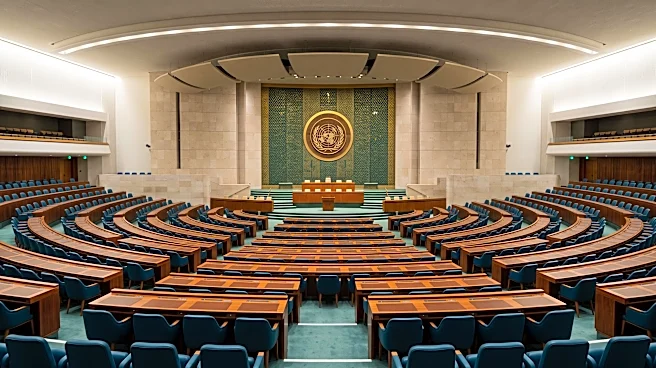
Kazakhstan's President Kassym-Jomart Tokayev has proposed that the key principles of the Shanghai Cooperation Organization (SCO) be enshrined in a special resolution of the UN General Assembly. This proposal was made during his address at the SCO Plus
summit in Bishkek. President Tokayev highlighted that the international relations system is undergoing a significant transformation, leading to a new world order characterized by growing geopolitical tensions, a crisis of trust, and weakening global governance mechanisms. He emphasized Kazakhstan's consistent advocacy for multipolarity, which aims to strengthen the unity of the international community based on the sovereign equality of states and the rule of international law. According to Tokayev, the SCO's long-standing experience demonstrates that the 'Shanghai Spirit' serves as a model for international cooperation. He further stated that the principles of equality and consensus within the SCO have become a 'gold standard' for successful multilateral cooperation and genuine multilateralism. The proposed resolution would be for the International Day of Multilateralism and Diplomacy for Peace.
Why It's Important?
This proposal by Kazakhstan carries significant implications for global governance and international relations, particularly concerning the role of multilateral organizations and the evolving world order. By seeking to enshrine SCO principles in a UN General Assembly resolution, Kazakhstan is attempting to elevate the 'Shanghai Spirit'—which emphasizes equality and consensus—to a more universally recognized standard for international cooperation. This move could be seen as an effort to counter what some perceive as a decline in trust and effectiveness within existing global governance structures. For the U.S., this development is important as it reflects a growing assertiveness from non-Western blocs in shaping international norms and institutions. If adopted, such a resolution could influence future diplomatic engagements and potentially challenge the traditional dominance of Western-led international frameworks. It underscores a shift towards a multipolar world, where various regional powers and organizations seek to define the terms of global engagement, potentially impacting U.S. foreign policy and strategic alliances.
What's Next?
The next step for this proposal would involve its formal introduction and deliberation within the UN General Assembly. Member states would need to consider and vote on the resolution, which could spark extensive diplomatic discussions and negotiations. The outcome will depend on the level of support from various countries, particularly those within and outside the SCO. Should the resolution gain traction, it could lead to increased recognition and adoption of the 'Shanghai Spirit' principles in broader international dialogues and agreements. Conversely, if it faces significant opposition, it might highlight existing divisions within the UN regarding the future direction of global governance. Major stakeholders, including the U.S. and its allies, will likely scrutinize the proposal to assess its potential impact on established international norms and their own strategic interests. The debate surrounding this resolution could also serve as a barometer for the evolving power dynamics in the international arena.
Beyond the Headlines
Beyond the immediate diplomatic implications, Kazakhstan's proposal touches upon deeper shifts in global political philosophy. The emphasis on 'multipolarity' and 'mutual responsibility' as alternatives to a 'cult of force and confrontation' reflects a broader sentiment among some nations to move away from unipolar or bipolar international systems. This initiative could be interpreted as an attempt to legitimize alternative models of international cooperation that prioritize consensus and equality among states, potentially challenging the hierarchical structures often associated with traditional global governance. Ethically, it raises questions about whose principles should guide international relations and how diverse geopolitical interests can be reconciled within a universal framework. Culturally, it signifies a growing confidence among non-Western nations to assert their values and approaches on the global stage, potentially leading to a more diverse and complex international legal and diplomatic landscape. The long-term shift could involve a re-evaluation of the foundational principles of international law and diplomacy, moving towards a more inclusive, albeit potentially more fragmented, global order.