






What's Happening?
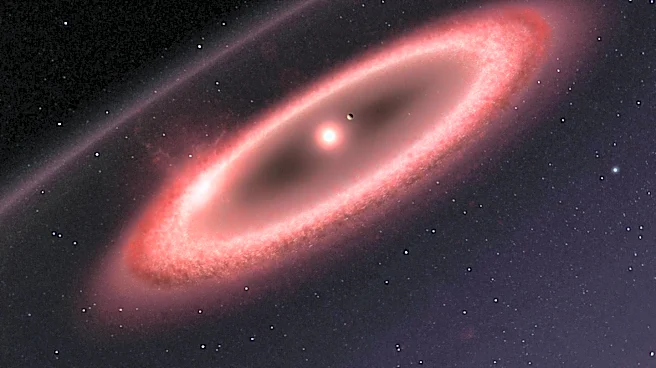
A new study has revealed that zodiacal dust in exoplanetary systems could significantly hinder the search for life on other planets. This dust, similar to the zodiacal light seen in our solar system, can scatter starlight and obscure the absorption spectra
used to detect atmospheric molecules on exoplanets. The study highlights that zodiacal dust can reduce the clarity of these spectra by up to 50%, complicating efforts to identify signs of life. The presence of zodiacal dust is common in systems with rocky, potentially habitable planets, making it a critical factor to consider in exoplanet research.
Why It's Important?
The findings underscore the complexities involved in the search for extraterrestrial life and the need for advanced observational techniques. Understanding the impact of zodiacal dust is crucial for accurately interpreting data from exoplanetary atmospheres, which could lead to false positives or negatives in the detection of life. This research emphasizes the importance of developing higher resolution spectral observations and longer observation times to mitigate the effects of dust. The study also highlights the need for astronomers to account for zodiacal dust when analyzing exoplanetary systems, ensuring that the search for life is based on reliable data.