



What's Happening?
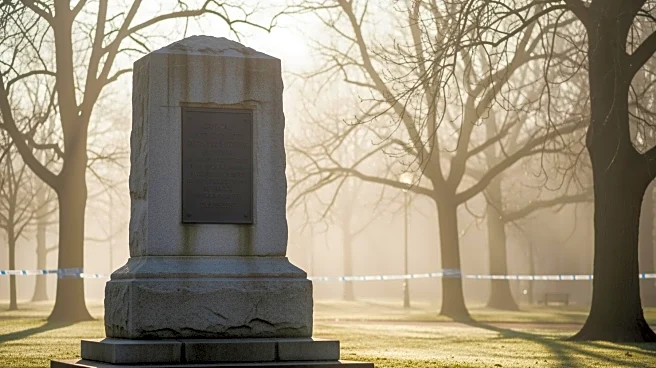
The Canadian Heritage Department has decided not to inscribe individual names on the monument dedicated to the 'victims of communism' in Ottawa. This decision follows a federal government report that linked many of the proposed names to Nazi affiliations.
Initially, the monument was to feature 553 names, but concerns raised by Jewish groups and media outlets led to the removal of over half of these names. The monument, which was proposed in 2007 and has a budget of C$7.5 million, was intended to honor those who suffered under communist regimes. The final design, named 'Arc of Memory,' aims to convey a journey from oppression to liberty.
Why It's Important?
The decision to omit names from the monument highlights the complexities involved in memorializing historical events and the importance of ensuring that such commemorations align with democratic values and human rights. The controversy underscores the challenges of historical interpretation and the potential for monuments to become focal points in cultural and political debates. This development may influence how future memorials are planned and executed, particularly those involving contentious historical narratives. It also reflects broader societal efforts to address and rectify historical inaccuracies and biases in public commemorations.
What's Next?
The monument will now feature thematic content rather than individual names, focusing on the broader educational and commemorative intent. This shift may prompt further discussions on how to appropriately honor victims of historical events without perpetuating inaccuracies or offending communities. Stakeholders, including government officials and community groups, may engage in dialogue to ensure that the monument serves its intended purpose without controversy. The decision could also lead to increased scrutiny of other memorial projects, both in Canada and internationally, to ensure they meet ethical and historical standards.