

What's Happening?
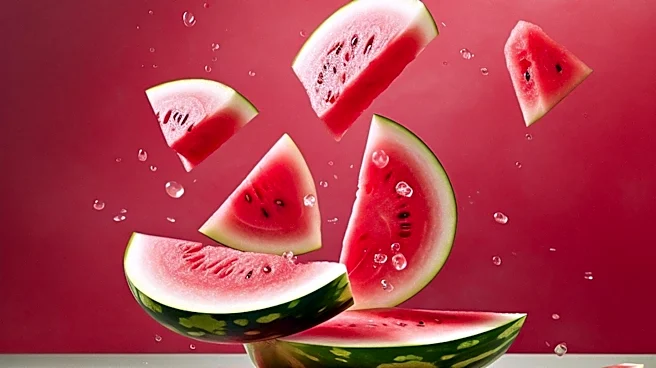
The U.S. Department of Agriculture (USDA) has published a new nutritional profile for raw seedless watermelon rind, revealing its potential health benefits. According to the USDA's FoodData Central database, 100 grams of raw seedless watermelon rind contains
19 calories, is composed of 95% water, and includes 1.5 grams of dietary fiber, 272 milligrams of potassium, and 7.1 milligrams of vitamin C, among other nutrients. This data, based on eight analyzed samples, aims to provide a better understanding of the nutritional content of watermelon rind, which is often discarded. The USDA's entry is specific to the rind of seedless watermelon, not the red flesh, and highlights that the rind is edible, though the tough outer skin may be unpleasant to eat raw.
Why It's Important?
The USDA's findings could influence consumer behavior by encouraging the use of watermelon rind, which is typically considered waste. By highlighting its nutritional value, the USDA is promoting a more sustainable approach to food consumption, potentially reducing food waste. This information could also inspire culinary innovation, as chefs and home cooks explore new ways to incorporate watermelon rind into dishes. Additionally, the data provides valuable insights for researchers and nutritionists interested in the health benefits of lesser-known food parts. The emphasis on the rind's nutritional content aligns with broader efforts to promote food sustainability and resourcefulness.