







What's Happening?
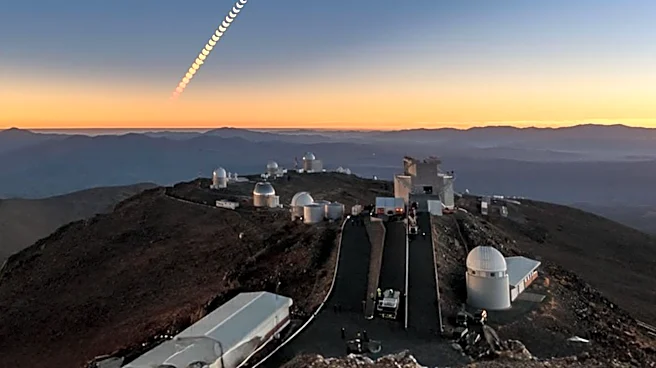
Iberia, the Spanish flag carrier, is organizing a special flight to observe the total solar eclipse on August 12, 2026. The flight, numbered IB1473, is named in honor of Nicolaus Copernicus, the astronomer born in 1473 who proposed the heliocentric model
of the solar system. This Airbus A321XLR flight will depart from Madrid, position itself in the path of totality over the province of Palencia, and return to Madrid. The flight is designed to provide optimal viewing conditions at an altitude of over 10,000 meters, minimizing atmospheric interference. Scientists from the Shelios Project, led by Miquel Serra-Ricart of the Instituto de Astrofísica de Canarias, will be on board to conduct observations. The event will also be live-streamed via Iberia's social media channels using Starlink connectivity.
Why It's Important?
This initiative by Iberia highlights the growing interest in 'dark sky tourism,' where travelers seek unique astronomical events. The flight not only offers a rare opportunity for scientists to study the eclipse from a high altitude but also showcases the integration of aviation and scientific research. By live-streaming the event, Iberia is making the experience accessible to a global audience, potentially increasing public interest in astronomy and science. The flight also underscores the role of airlines in facilitating scientific exploration and education, while promoting Spain as a prime destination for astronomical events.
What's Next?
Following the eclipse, the data collected by the scientists on board could contribute to further research in solar physics and atmospheric science. The success of this flight may encourage other airlines to organize similar events for future astronomical phenomena, potentially leading to a new niche in the tourism industry. Additionally, the live-streaming aspect could set a precedent for how airlines engage with the public during special events, enhancing their brand image and customer engagement.
Beyond the Headlines
The collaboration between Iberia and scientific institutions highlights the potential for partnerships between commercial entities and research organizations. This could lead to more innovative uses of commercial flights for scientific purposes, such as environmental monitoring or space research. Furthermore, the event emphasizes the importance of public engagement in science, as live-streaming allows people worldwide to participate in the experience, fostering a greater appreciation for scientific endeavors.