




What's Happening?
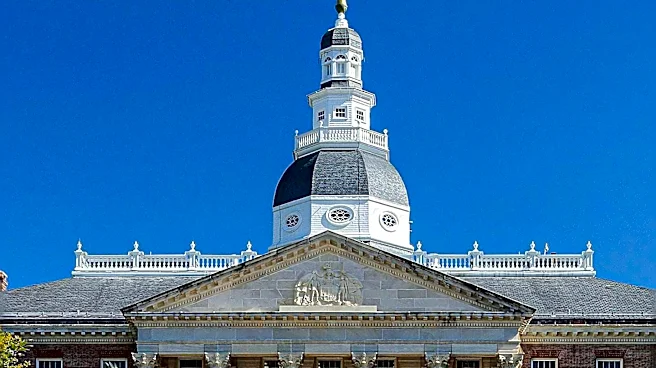
Maryland is actively building a workforce prepared for the age of artificial intelligence through several key initiatives. The state recently celebrated the opening of the Ratcliffe Applied Technology & Trades Center, supported by a $2.5 million grant
and state funding, offering hands-on training in high-demand trades. Additionally, the Maryland Department of Labor, in partnership with Lieutenant Governor Aruna Miller's office and Paladin Global Institute, hosted a 'Cyber in the Age of AI' roundtable to discuss evolving workforce needs, including reskilling and upskilling. State Senator Benjamin T. Brooks co-sponsored legislation establishing a framework for Maryland's AI workforce, fostering collaboration among government, academia, and the private sector, and creating an AI incubation laboratory within the University System of Maryland. The state also launched the Artificial Intelligence Public Service Fellowship to incentivize students into data science and machine learning careers within state agencies. Gregory W. Fowler, president and CEO of University of Maryland Global Campus (UMGC), highlighted UMGC's role as a premier academic partner of AI NEXTGEN America, emphasizing lifelong learning.
Why It's Important?
Maryland's comprehensive approach to AI workforce development is crucial for ensuring its economic competitiveness and preparing its citizens for future job markets. By investing in both traditional trades and advanced AI skills, the state is addressing a broad spectrum of workforce needs. The legislative framework and the AI incubation laboratory demonstrate a proactive strategy to integrate AI responsibly across government and industry, fostering innovation while addressing ethical considerations. The emphasis on public-private partnerships and academic collaboration is vital for creating a robust ecosystem that can adapt to rapid technological changes. This forward-thinking strategy aims to position Maryland as a leader in the AI economy, attracting talent and investment while providing its residents with opportunities for high-wage, in-demand careers.
What's Next?
The newly opened Ratcliffe Applied Technology & Trades Center will begin providing specialized training, while the AI incubation laboratory will continue its work in evaluating new systems and developing solutions. The Artificial Intelligence Public Service Fellowship will start attracting and placing students and recent graduates into state agencies, creating a direct pipeline for AI talent. Ongoing discussions from the 'Cyber in the Age of AI' roundtable will likely lead to further policy recommendations and program developments. University of Maryland Global Campus and other academic institutions will continue to develop curricula and programs to meet the evolving demands of the AI-driven economy. Maryland's participation in the Raise Us Initiative and Governor Moore's allocation of $1 million for workforce strategies will further support these efforts, with a focus on policies, incentives, and training in high-demand fields.
Beyond the Headlines
Maryland's strategy reflects a broader national challenge: how to harness the transformative power of AI while ensuring equitable access to new opportunities and mitigating potential job displacement. The state's focus on 'human-centered software design and accessibility' and involving unions in the AI transition highlights an awareness of the social and ethical dimensions of AI adoption. This integrated approach, combining legislative action, educational investment, and industry collaboration, could serve as a blueprint for other states grappling with the implications of AI. The initiative also underscores the critical role of continuous learning and reskilling in maintaining a dynamic and adaptable workforce in an era of rapid technological advancement, moving beyond basic AI adoption to deeper integration and competency.