





What's Happening?
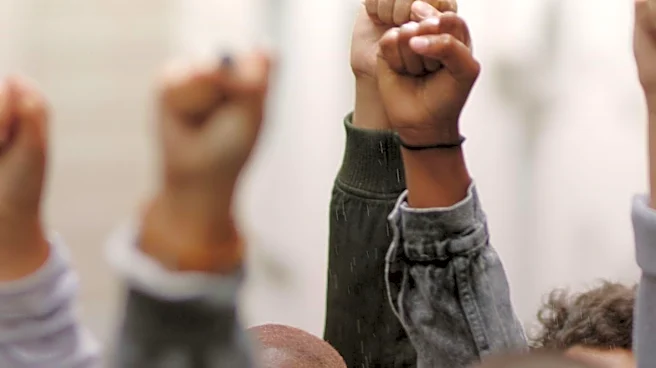
Protests have been a fundamental part of American history, dating back to the Boston Tea Party in 1773. Recent demonstrations, such as the 'No Kings' protests, have been organized to oppose President Trump's policies, including his executive order to remove
certain historical narratives from public spaces. This order is part of a broader conservative effort to downplay America's problematic past. Trump's administration has been criticized for targeting marginalized groups and rolling back protections. Protests have been a response to these actions, emphasizing the importance of free speech and dissent in American democracy.
Why It's Important?
The protests underscore the ongoing struggle for civil rights and equality in the U.S. They highlight the tension between government policies and public dissent, reflecting a broader societal debate about America's historical narrative and current policies. The demonstrations serve as a reminder of the power of grassroots movements in shaping public policy and advancing social justice. They also illustrate the challenges faced by marginalized communities under the current administration, emphasizing the need for continued advocacy and activism to protect civil liberties.
What's Next?
More than 100 demonstrations are planned across the nation, organized by groups like Get Free, to continue advocating for equality and justice. These protests are expected to maintain pressure on the government to address issues of inequality and civil rights. The ongoing public dissent may influence future policy decisions and political discourse, potentially leading to legislative changes or shifts in public opinion. The protests also serve as a platform for marginalized voices to be heard, potentially impacting future elections and political strategies.
Beyond the Headlines
The protests reflect deeper cultural and historical issues, such as the legacy of slavery, indigenous rights, and the fight for LGBTQ+ rights. They highlight the role of protest in advancing democracy and equality, as well as the ongoing struggle to address systemic injustices. The demonstrations also raise questions about the balance between national heritage and the need to confront uncomfortable truths about America's past. This ongoing dialogue is crucial for fostering a more inclusive and equitable society.