





What's Happening?
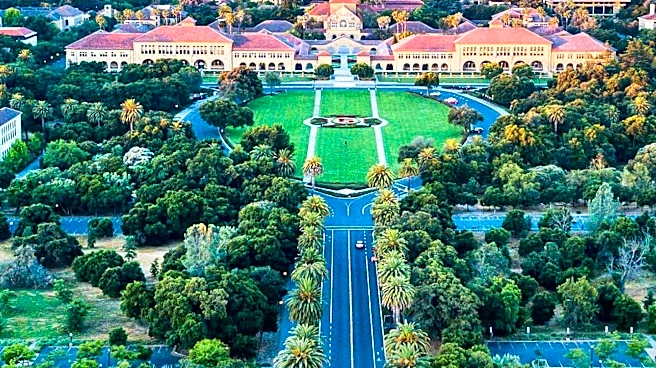
In the spring of 2017, Stanford University became a focal point for a national debate on free speech following the cancellation of a scheduled talk by conservative commentator Ann Coulter. The event, organized by the Stanford College Republicans, was
called off due to what the university cited as 'credible threats of violence' and 'limited capacity of our security resources.' This decision sparked widespread protests and exposed deep divisions on campus, pitting the ideal of open intellectual inquiry against demands for safety and inclusivity. Coulter, known for her inflammatory rhetoric, was viewed by supporters as a challenge to ideological conformity and by opponents as a threat to the safety of marginalized students. The incident highlighted the complex challenges universities face in balancing First Amendment principles with campus safety concerns, particularly in a politically charged environment.
Why It's Important?
The Stanford incident is significant because it exemplifies the ongoing tension surrounding free speech on U.S. college campuses. It underscores the challenges private universities face in navigating their own speech policies versus the broader societal expectations of open discourse. The cancellation, framed as a security measure, was perceived by many as a 'heckler's veto,' where threats of disruption effectively silenced a speaker. This event contributed to a chilling effect on campus, leading to increased self-censorship and a reluctance to engage with dissenting opinions. It also fueled strategic litigation by conservative legal organizations against universities, alleging viewpoint discrimination. The controversy forced a national conversation about the evolving definition of harm in the digital age and whether campuses can simultaneously be 'safe spaces' and 'marketplaces of ideas.'
What's Next?
The legacy of the Stanford-Coulter incident continues to influence how universities approach controversial speakers and free speech policies. Institutions are likely to continue grappling with balancing security concerns, student demands for inclusivity, and the fundamental principles of academic freedom. This event has set a precedent for how similar situations might be handled, potentially leading to more robust security planning for high-profile events or, conversely, increased caution in inviting speakers deemed controversial. Legal challenges against universities regarding free speech are also likely to persist, pushing institutions to refine their policies and justifications for event cancellations. The ongoing debate will continue to shape campus culture, potentially leading to further segregation of ideological groups or renewed efforts to foster dialogue across differing viewpoints.
Beyond the Headlines
The Stanford controversy delves into the deeper philosophical conflict between traditional academic values of open inquiry and contemporary demands for psychological safety and identity politics. It highlights how the concept of 'harm' has expanded beyond physical threats to include emotional and psychological distress, particularly for marginalized groups. This shift challenges the traditional university mission of fostering robust debate, even with uncomfortable ideas. The incident also exposes the differing legal frameworks for public versus private universities regarding free speech, creating a complex landscape where institutional autonomy clashes with public expectations. Ultimately, the event serves as a case study in the struggle to define the boundaries of free expression in a polarized society, questioning whether universities can cultivate resilient intellectual communities capable of withstanding the friction of diverse thought, or if they will increasingly prioritize comfort over confrontation.