
What's Happening?
South Korea's Unification Ministry has labeled the 2016 closure of the Kaesong Industrial Complex as 'self-injurious,' indicating a renewed effort to revive this symbol of inter-Korean cooperation. The
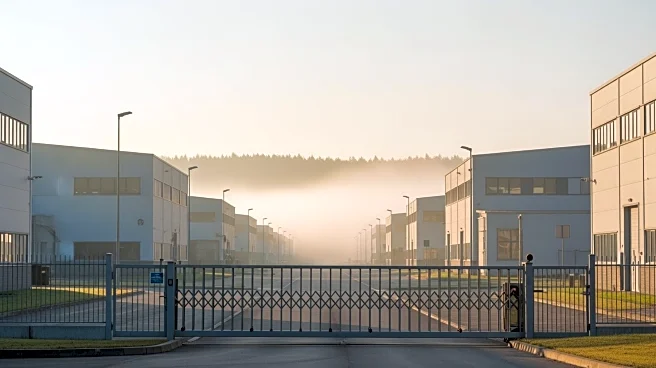
complex, which was shut down by the conservative administration of President Park Geun-hye in response to North Korea's nuclear tests and missile launches, was once a significant site for economic and political engagement between the two Koreas. The ministry expressed regret over missed opportunities to reopen the complex, especially after North Korean leader Kim Jong-un showed willingness to resume operations in 2019. The complex, located just north of the Demilitarized Zone, employed around 55,000 North Korean workers at 120 South Korean firms before its closure.
Why It's Important?
The reopening of the Kaesong Industrial Complex is seen as a potential catalyst for improving inter-Korean relations, which have been strained since its closure. The complex served as a rare platform for economic collaboration and political dialogue, and its revival could signal a thaw in relations between the two countries. The South Korean government views the complex as a barometer for the possibility of renewed dialogue and cooperation. However, reopening the complex would require navigating international sanctions and improving diplomatic relations with Pyongyang. The move could also provide economic benefits to South Korean businesses that suffered losses from the shutdown.
What's Next?
The South Korean government plans to prepare for a possible resumption of operations at the Kaesong Industrial Complex. This includes efforts to reinstate a support foundation for participating companies in collaboration with the National Assembly. The Unification Ministry has emphasized the need to restore communication channels with North Korea as a first step toward rebuilding trust. However, any progress will depend on a significant improvement in inter-Korean relations and careful handling of international sanctions. The ministry's remarks suggest a broader policy shift towards engagement with North Korea under the current Democratic Party-led government.