
What's Happening?
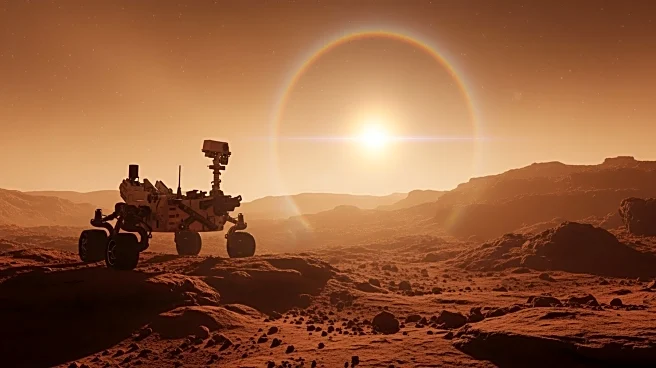
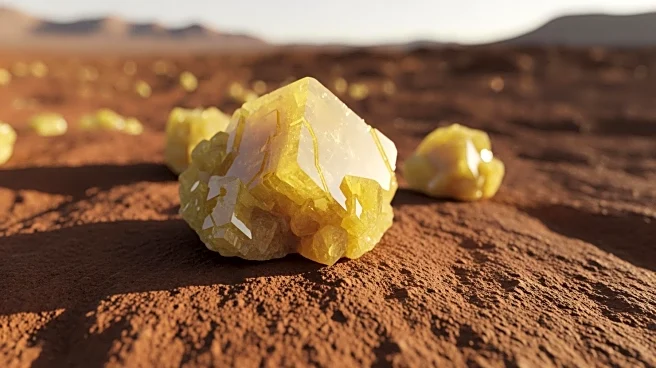
NASA's Curiosity rover has made an unexpected discovery on Mars, revealing yellow crystals of elemental sulfur after accidentally breaking a rock in the Gediz Vallis channel. This finding, made on May
30, 2024, challenges existing theories about the geological and environmental history of the Mount Sharp region. The presence of pure sulfur, rather than sulfates, suggests unique environmental conditions not previously associated with this location. The discovery of an entire field of similar rocks has intrigued scientists, as pure sulfur typically forms under specific conditions not yet identified on Mars. This adds complexity to the geological narrative of the region, which has been explored by Curiosity since 2014.
Why It's Important?
The discovery of elemental sulfur on Mars has significant implications for understanding the planet's geological history and potential habitability. Sulfur chemistry is closely linked to geological and biological processes on Earth, raising questions about past environmental conditions on Mars. While the presence of sulfur does not indicate life, it provides a more detailed map of past chemical environments, essential for assessing the planet's habitability. This finding could lead to a reevaluation of Mars' geological history and influence future exploration strategies. Understanding these conditions is crucial for determining the planet's potential to support life, past or present.
What's Next?
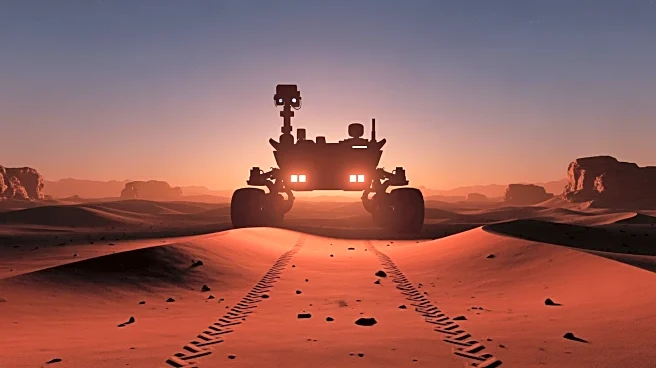
Curiosity will continue to explore the sulfur field and document the channel in detail, capturing panoramas for analysis. The rover is set to leave the Gediz Vallis canal and head towards a region known as 'boxwork,' characterized by ridges formed by groundwater processes. This area is of interest due to its potential as a past habitat, similar to early Earth environments. The mission aims to further investigate the geological history of Mars, with the discovery of sulfur serving as a reminder of the dynamic nature of planetary exploration. Future studies will focus on understanding the formation conditions of the sulfur and its implications for Mars' history.