
What's Happening?
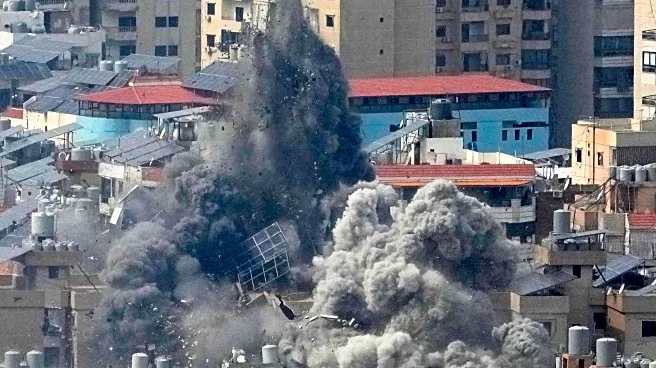
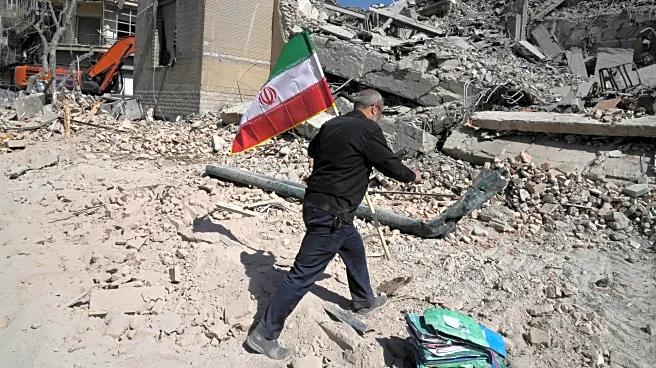
Lebanon has taken a significant step in response to the escalating conflict involving Iran and Israel by ordering the arrest of members of Iran's Revolutionary Guards (IRGC) within its borders. Lebanese Prime Minister Nawaf Salam announced measures to prevent
any military activities by the IRGC in Lebanon. The Lebanese government has also decided to reinstate visa requirements for Iranian citizens, signaling a tightening of its stance against Iranian influence. This move comes amid heightened tensions in the region, with Israel conducting military operations against Hezbollah, an Iran-backed group, in Lebanon. The Lebanese cabinet's decision reflects a broader regional conflict involving multiple stakeholders, including Iran, Israel, and Hezbollah.
Why It's Important?
The Lebanese government's actions are crucial as they represent a shift in the regional power dynamics, potentially affecting the balance of influence between Iran and its adversaries. By targeting the IRGC, Lebanon is attempting to distance itself from Iranian military activities, which could lead to a realignment of alliances in the Middle East. This development may also impact U.S. foreign policy, as the U.S. has interests in curbing Iranian influence in the region. The decision to arrest IRGC members could lead to increased tensions between Lebanon and Iran, potentially affecting Lebanon's internal stability and its relations with neighboring countries.
What's Next?
The situation is likely to evolve as Lebanon enforces its new policies against the IRGC. Iran may respond diplomatically or militarily, which could further escalate tensions in the region. The international community, including the United States and European allies, will be closely monitoring these developments. Potential diplomatic interventions or sanctions could be considered to prevent further escalation. Additionally, Lebanon's internal political dynamics may be affected as different factions within the country respond to the government's actions.