


What's Happening?
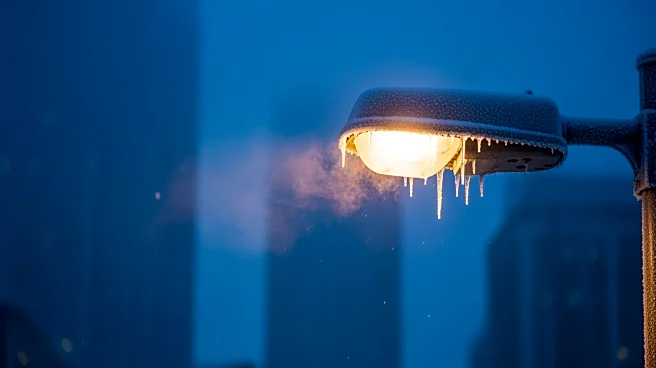
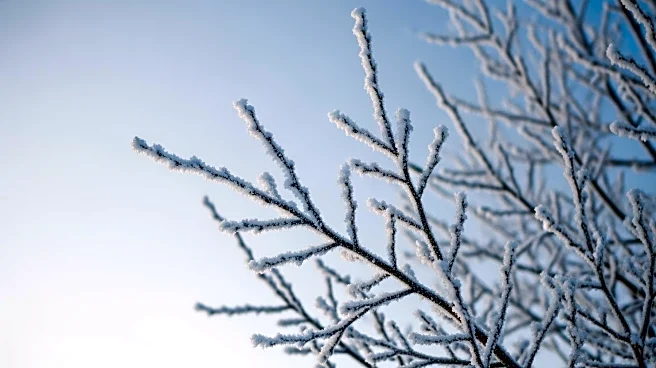
A severe cold weather system is affecting the Northeast United States, placing approximately 100 million Americans under extreme cold warnings. The coldest winds of the season are expected, with wind chills potentially reaching -20 degrees Fahrenheit
in areas such as Michigan and northern Ohio. Southern Ohio and West Virginia may experience wind chills in the -10s, while Richmond, Virginia, could see below-zero wind chills. New York City might face wind chills as low as -20, and upstate New York around Saranac Lake could experience -40. The extreme cold is attributed to strong winds gusting between 30 to 50 mph, particularly on Saturday. The cold weather system is also bringing snow, with light snow showers expected from the Appalachians to upstate New York. Boston and much of New England are forecasted to receive 2 to 4 inches of snow through Saturday evening.
Why It's Important?
The extreme cold poses significant risks to public safety, with potential for frostbite occurring in as little as 10 minutes on exposed skin. The cold weather can disrupt daily life, affecting transportation, energy consumption, and public health. Vulnerable populations, such as the elderly and those without adequate heating, are at increased risk. The economic impact could be substantial, with potential disruptions to businesses and increased demand on energy resources. The cold snap highlights the importance of preparedness and resilience in the face of severe weather conditions.
What's Next?
A warming trend is expected to begin next week, with temperatures in New York City and Boston potentially rising above freezing by Wednesday. The middle of the country is forecasted to experience above-average temperatures by the end of the week, while the Northeast will return to typical mid-February conditions. Authorities and emergency services are likely to remain on high alert, providing assistance to those affected by the cold and ensuring infrastructure resilience.