
What's Happening?
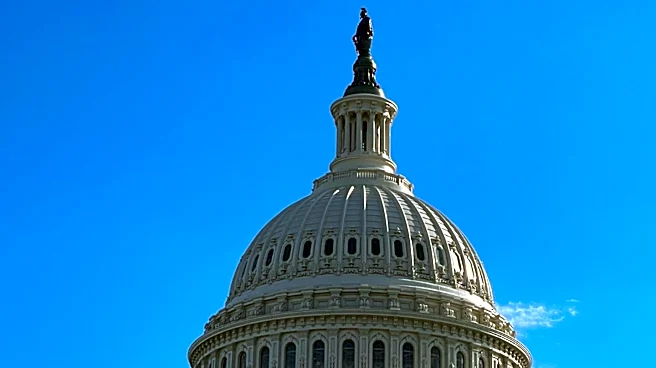
U.S. Senators John Hickenlooper (D-CO) and John Curtis (R-UT) announced the Senate passage of their bipartisan legislation, the Snow Water Supply Forecasting Program Reauthorization Act. This bill aims
to enhance the prediction and measurement of water supply, crucial for managing drought conditions across the Western United States. The region, including Colorado and Utah, is currently experiencing a historic 1,200-year climate-driven drought, which has led to record low snowpack levels in Colorado. The legislation reauthorizes the Bureau of Reclamation’s (BOR) Snow Water Supply Forecasting Program through 2031, ensuring continued funding of $15 million over five years. It also updates existing authorization language to prioritize water supply forecasting activities that support interstate water management decisions. Companion legislation, introduced by Colorado Representatives Joe Neguse and Jeff Hurd, has already passed the House. The bill is supported by a broad coalition of organizations, including American Rivers, the Southwestern Water Conservation District, and the Environmental Defense Fund.
Why It's Important?
The passage of the Snow Water Supply Forecasting Program Reauthorization Act is critical for the Western U.S., where up to 80% of the annual surface water supply in states like Colorado originates from snowmelt runoff. Accurate snowpack measurements are essential for understanding the volume of snowmelt that feeds rivers and streams, directly impacting water availability for agriculture, communities, and ecosystems. The ongoing severe drought conditions underscore the urgent need for improved water management tools. By reauthorizing and funding this program, the legislation provides states with better data to make informed decisions about water allocation and conservation. This will help mitigate the economic and social impacts of drought, ensuring more reliable water resources for various stakeholders and supporting long-term regional stability in the face of climate change. The bipartisan nature of the bill highlights a shared understanding of the severity of the water crisis in the West.
What's Next?
Following its passage in the Senate, the Snow Water Supply Forecasting Program Reauthorization Act will now proceed to the President for signature, as companion legislation has already passed the House. Once enacted, the Bureau of Reclamation will continue to provide grants to advance emerging snow monitoring technology, which is expected to improve water supply predictions. This will enable water managers, farmers, and communities across the Western U.S. to better plan for and adapt to drought conditions. The reauthorization through 2031 ensures a sustained effort in enhancing water resource management. Stakeholders, including state water agencies, environmental groups, and agricultural associations, will likely work with the BOR to implement the program's provisions and utilize the improved forecasting data to inform their water management strategies and conservation efforts.
Beyond the Headlines
This legislation addresses a fundamental challenge in the Western U.S.: the increasing scarcity of water due to climate change and prolonged drought. Beyond immediate water management, the bill's emphasis on advancing snow monitoring technology signifies a broader shift towards data-driven environmental policy. The reauthorization of the program through 2031 reflects a long-term commitment to understanding and adapting to changing hydrological patterns. This proactive approach is crucial for regional resilience, potentially fostering innovation in water conservation and infrastructure. The bipartisan support for the bill also suggests a growing recognition across the political spectrum of the need for collaborative solutions to environmental challenges, setting a precedent for future legislative efforts in climate adaptation and resource management. The improved forecasting capabilities could also influence interstate water compacts and agreements, particularly concerning the Colorado River Basin, by providing more precise data for negotiations and compliance.