







What's Happening?
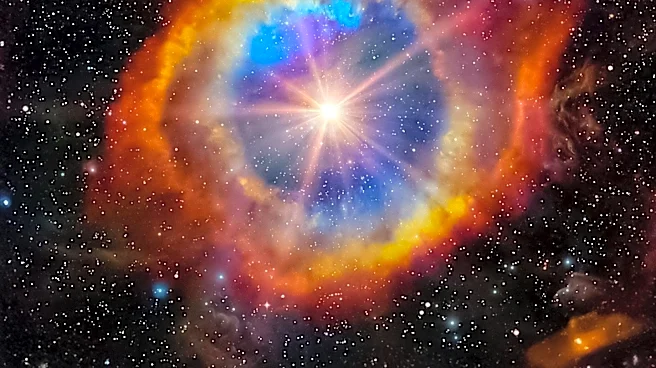
NASA's Chandra X-ray Observatory has released a series of cosmic images in red, white, and blue to commemorate the 250th anniversary of the United States. These images showcase the universe's wonders, including Cassiopeia A, NGC 3603, NGC 4736, and ZwCl
0024+1652. The images combine X-ray data from Chandra with optical and infrared data from the Hubble and James Webb Space Telescopes, as well as ground-based telescopes. The release also includes new sonifications, translating astronomical data into sound, allowing the public to experience these cosmic phenomena audibly. The sonification project is part of NASA's Universe of Learning program, led by the Chandra X-ray Center.
Why It's Important?
This initiative highlights NASA's ongoing efforts to engage the public with space science through innovative means. By using visual and auditory representations, NASA aims to make complex astronomical data more accessible and engaging. The project underscores the importance of space exploration in understanding the universe and celebrates the technological advancements that allow such explorations. It also reflects the collaborative efforts of various scientific institutions and the role of space science in national celebrations, fostering a sense of unity and pride in scientific achievements.
What's Next?
NASA will likely continue to develop similar projects that combine visual and auditory data to enhance public engagement with space science. Future initiatives may include more interactive and immersive experiences, leveraging advancements in technology to bring space exploration closer to the public. The success of this project could inspire other scientific organizations to adopt similar approaches, broadening the reach and impact of scientific communication.
Beyond the Headlines
The use of sonification in this project highlights the potential for alternative methods of data representation in science communication. This approach not only aids those with visual impairments but also opens new avenues for experiencing and understanding complex data. It reflects a broader trend towards inclusivity and accessibility in science, emphasizing the importance of diverse methods in engaging a wider audience.