






What's Happening?
Ukraine's drone artillery brigades are primarily utilizing drones for precision strikes and deep suppression, while conventional artillery focuses on fire support for infantry and suppressing Russian assault waves. Drones are instrumental in finding,
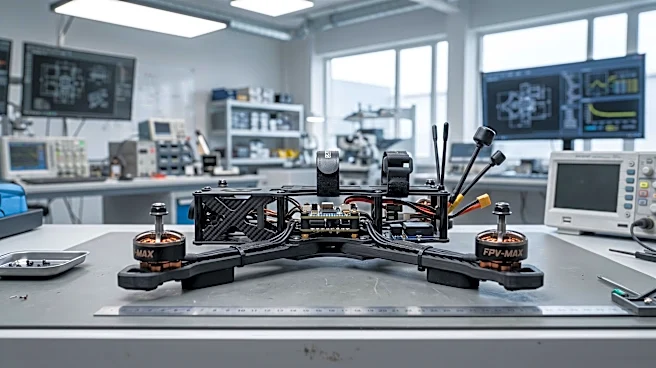
marking, and correcting targets, significantly improving accuracy and allowing artillery units to fire fewer rounds before relocating. This drone assistance has enabled older, shorter-range towed guns to remain effective in fire support and suppression, despite being outranged by Russian artillery. The use of First Person View (FPV) drones for precision strikes is highly lethal and cost-effective, with 20 FPV drones costing approximately $20,000 to destroy multiple targets, compared to dozens of conventional shells costing $3,000-$4,000 each. These FPV drones are often produced by Ukrainian manufacturers or assembled from commercial off-the-shelf parts, costing between $300 and $1,500 per unit.
Why It's Important?
The Ukrainian experience highlights a transformative shift in modern artillery warfare, demonstrating how drone integration can significantly enhance the capabilities of existing military assets. For the U.S. and its allies, this offers valuable lessons in optimizing military spending and extending the operational life of older equipment. The cost-effectiveness of FPV drones for precision strikes presents a compelling alternative to expensive precision-guided munitions, potentially influencing future procurement strategies and defense budgets. This model also underscores the importance of rapid innovation and localized production in wartime, as Ukraine's ability to quickly manufacture and deploy drones from readily available components has been a critical factor. The increased accuracy and reduced exposure for artillery crews due to drone assistance could lead to fewer casualties and more efficient use of resources in future conflicts, impacting military doctrine and training programs globally.
What's Next?
The success of Ukraine's drone artillery brigades is likely to accelerate the adoption of similar strategies and technologies by other nations, including the U.S. military. There will likely be increased investment in developing and integrating advanced drone capabilities with existing artillery systems. This could involve further research into AI-driven targeting, swarm coordination, and counter-drone measures to mitigate vulnerabilities. Training programs for military personnel will need to adapt to incorporate drone operation and coordination as a core skill for artillery units. Furthermore, the emphasis on cost-effective, rapidly deployable drone solutions may spur innovation in the defense industry, encouraging the development of more affordable and accessible military technologies. However, challenges such as electronic warfare and weather limitations for drone operations will continue to drive the need for a balanced approach that integrates both drone and conventional artillery capabilities.
Beyond the Headlines
The integration of drones into artillery operations, as seen in Ukraine, represents a broader trend towards asymmetric warfare and the democratization of military technology. The ability to achieve significant tactical effects with relatively inexpensive, commercially available components challenges traditional notions of military power, where technological superiority was often equated with high-cost, complex systems. This shift could empower smaller nations or non-state actors with advanced capabilities, potentially altering the global security landscape. The reliance on drones also raises questions about the ethical implications of remote warfare, the psychological impact on combatants, and the potential for autonomous systems to make life-or-death decisions. Moreover, the vulnerability of drones to electronic warfare and environmental factors underscores the ongoing cat-and-mouse game between offensive and defensive technologies, driving continuous innovation and adaptation in military strategy.