








What's Happening?
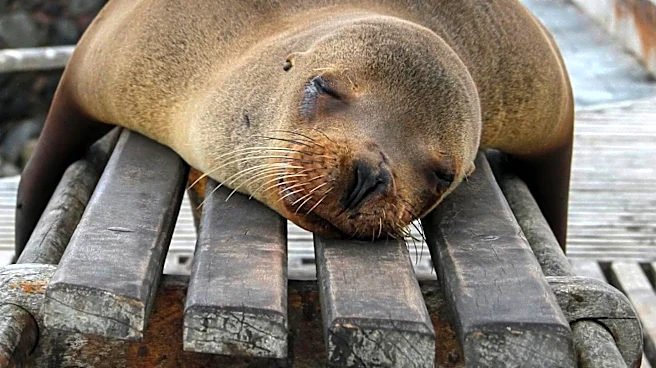
A large Steller sea lion recently appeared at San Francisco's Pier 39, drawing comparisons to the previously viral sea lion known as Chonkers. Despite the striking resemblance and the new arrival's significant size, officials from Pier 39 and The Marine
Mammal Center have confirmed that this is a different animal. The original Chonkers, a 2,000-pound 'seal-ebrity,' gained international fame earlier this year for his unusual two-month stay at the pier, becoming a viral sensation due to his enormous frame. Witnesses described the sound of Chonkers landing on the dock as akin to 'an oak tree falling down.' The Marine Mammal Center tracked Chonkers from March 13, and his presence led to the creation and quick sell-out of a Chonkers plush toy. The current sea lion, while large, is believed to be slightly smaller than Chonkers, with a Pier 39 spokesperson suggesting it might be 'Chonkers' buddy.' Steller sea lions are more commonly found in Washington and Alaska, but their presence in the San Francisco Bay Area, often in search of food, is not unprecedented, though Chonkers' extended stay was considered exceptional.
Why It's Important?
The appearance of another large Steller sea lion at Pier 39 highlights the ongoing public fascination with wildlife in urban environments and the significant impact of social media on public perception and engagement with natural phenomena. The viral fame of Chonkers previously demonstrated how individual animals can become cultural icons, drawing crowds and generating significant media attention, which in turn can boost local tourism and raise awareness about marine life. This new arrival, even if not the original Chonkers, continues this trend, reinforcing Pier 39's reputation as a prime location for observing sea lions. The distinction made by officials underscores the importance of accurate information in an age of rapid viral spread, preventing potential misinformation about the animals. Furthermore, the increased frequency of Steller sea lion sightings in the area, as noted by longtime Pier 39 harbormaster Sheila Chandor, could indicate broader ecological shifts or changes in food availability, prompting further scientific observation and conservation efforts.
What's Next?
Pier 39 staff currently have no plans to name the new Steller sea lion, anticipating that it may move on within a few days, though they hope it stays through the holiday weekend. The Marine Mammal Center and Pier 39 will likely continue to monitor the sea lion's presence and behavior, as they did with Chonkers. Continued sightings of Steller sea lions in the San Francisco Bay Area could lead to further research into their migration patterns and feeding habits, especially if their presence becomes a more regular occurrence. The public's engagement with these animals will likely remain high, potentially leading to more educational initiatives about marine conservation and the specific characteristics of Steller sea lions versus the more common California sea lions at Pier 39. The ongoing interest also presents opportunities for local businesses and tourism, as visitors are drawn to witness these large marine mammals.
Beyond the Headlines
The phenomenon of 'celebrity animals' like Chonkers, and now his lookalike, reflects a deeper human connection to nature and a desire for unique, shareable experiences. This trend, amplified by social media, can inadvertently serve as a powerful tool for conservation, drawing attention to species that might otherwise go unnoticed. However, it also raises questions about the ethics of wildlife tourism and the potential for human interference or disturbance to the animals. The careful distinction made by officials between the new sea lion and Chonkers also highlights the challenges of managing public expectations and combating misinformation in the digital age. The increased presence of Steller sea lions, typically found further north, could be an indicator of broader environmental changes, such as shifts in ocean temperatures or prey distribution, prompting a need for long-term ecological studies to understand these movements and their implications for marine ecosystems.