



What's Happening?
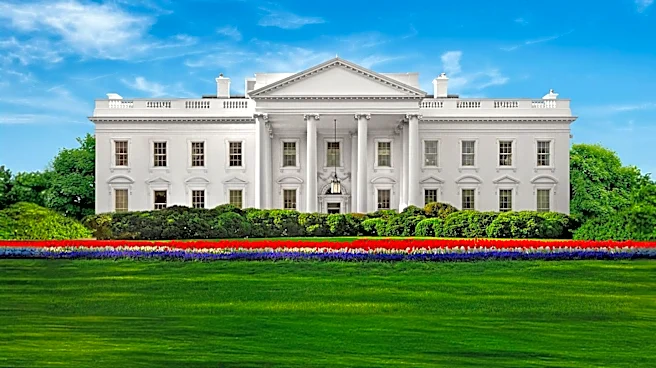
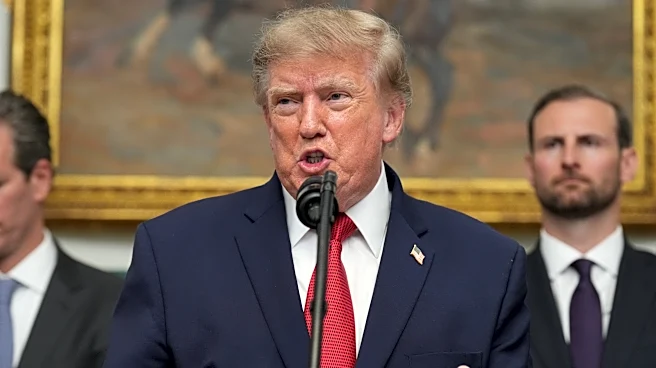
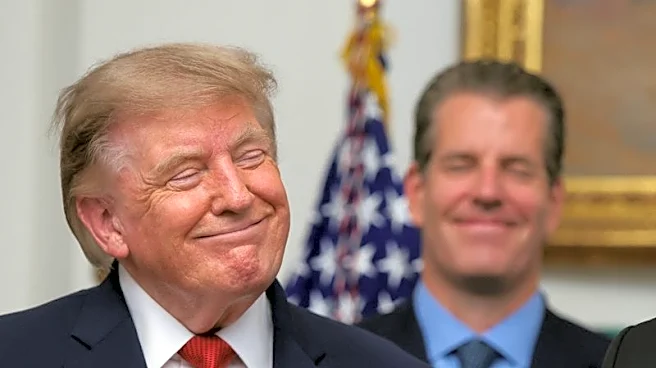
President Trump recently held a meeting at the White House with prominent crypto executives, including Coinbase CEO Brian Armstrong, and regulators such as Securities and Exchange Commission Chair Paul Atkins. Following this meeting, President Trump publicly
endorsed the Clarity Act, describing it as a “very, very powerful” piece of legislation and calling on lawmakers to ensure its passage. This crypto market structure bill, which aims to establish a clear framework for classifying digital assets as securities, commodities, or payment stablecoins, was passed by the House of Representatives last year but has faced delays. A vote on the bill, initially hoped for in August, is now scheduled for September. This development coincides with a significant surge in the cryptocurrency market, with Bitcoin approaching $72,000 and Bitcoin ETFs attracting over $1 billion in investments, indicating a strong bullish sentiment among investors.
Why It's Important?
The President's vocal support for the Clarity Act signals a potential shift towards clearer regulatory guidelines for the cryptocurrency industry in the U.S. For years, crypto businesses have advocated for such clarity, arguing that the absence of defined rules hinders innovation and investment. The passage of this act could provide much-needed legal certainty, potentially encouraging more mainstream financial institutions to engage with digital assets and fostering a more stable environment for crypto-related ventures. This regulatory clarity could also protect investors by establishing clear distinctions between different types of digital assets, thereby reducing ambiguity and potential for fraud. The concurrent bullish trend in the crypto market, fueled by substantial ETF inflows and a weakening dollar, suggests that investor confidence is high, and a supportive regulatory environment could further accelerate the growth and adoption of cryptocurrencies within the U.S. financial landscape.
What's Next?
The immediate next step for the Clarity Act is a vote in September, which will determine its legislative future. The outcome of this vote will be closely watched by crypto businesses, investors, and regulators alike, as it could set a precedent for how digital assets are regulated in the U.S. If passed, the act would necessitate the development of specific implementation guidelines by regulatory bodies, which could take time. Meanwhile, the cryptocurrency market is expected to continue its volatile yet upward trend, influenced by both regulatory developments and broader economic factors, such as the Treasury Department's plans to increase government debt repurchases. The industry will likely continue to lobby for favorable regulatory frameworks, and the engagement of high-profile figures like President Trump could maintain momentum for legislative action.
Beyond the Headlines
The President's endorsement of the Clarity Act extends beyond immediate market reactions, touching upon the broader integration of digital assets into the U.S. financial system. This move could legitimize cryptocurrencies in the eyes of traditional finance and the general public, potentially paving the way for wider adoption and innovation. The debate surrounding the Clarity Act also highlights the ongoing tension between fostering technological advancement and ensuring investor protection within a rapidly evolving sector. The establishment of clear classifications for digital assets could influence future legal challenges and regulatory enforcement actions, providing a more predictable legal landscape. Furthermore, the increased institutional investment in Bitcoin ETFs suggests a growing acceptance of cryptocurrencies as a legitimate asset class, moving them from the fringes of finance to a more central role in investment portfolios. This could lead to a re-evaluation of monetary policy and financial regulations to accommodate the unique characteristics of digital currencies.