







What's Happening?
A national study led by researchers from The University of Texas Medical Branch (UTMB) has identified substantial geographic and economic disparities in access to specialized burn care across the contiguous United States. Published in JAMA Network Open,
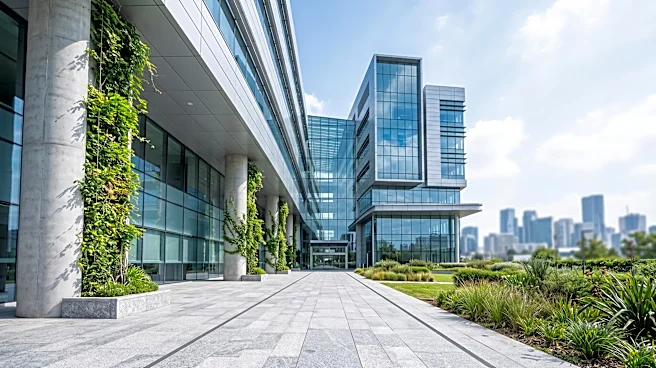
the study found that while the average American lives within an hour's drive of a verified burn center, over one-third of U.S. counties have travel times exceeding two hours, and nearly 9% face drives longer than four hours. These disparities are particularly pronounced in rural, small-town, and lower-income communities. Verified burn centers offer critical services such as intensive care, surgery, wound management, and rehabilitation for severe burn injuries. The research highlights that rapid access to these specialized facilities is crucial for patient outcomes, as delays can increase complications and worsen recovery.
Why It's Important?
This study underscores a critical public health issue, revealing that equitable access to life-saving specialized medical care is not uniformly distributed across the U.S. The findings indicate that residents in underserved areas, particularly rural communities, are at a significant disadvantage when experiencing severe burn injuries. Delays in receiving specialized treatment can lead to more severe health consequences, prolonged hospital stays, and increased disability. This impacts not only individual patient health but also places a greater burden on local healthcare systems that may not be equipped to handle complex burn cases. The study's insights are vital for policymakers and health systems to address these access gaps, potentially through improved referral networks, telemedicine, or enhanced aeromedical transport, to ensure better outcomes for all Americans, regardless of their location or socioeconomic status.
What's Next?
The researchers suggest that their findings can inform future planning for burn care systems and resource allocation. Potential solutions include expanding telemedicine capabilities to connect clinicians in underserved areas with burn expertise, strengthening regional referral networks to facilitate timely transfers, and improving aeromedical transport systems for rapid patient relocation. Identifying specific underserved areas could also lead to the deployment of additional burn care resources. The study's authors hope that this updated national picture of burn center accessibility will contribute to ongoing discussions about trauma system planning and efforts to reduce healthcare disparities, ultimately improving care for patients with serious burn injuries across the United States.
Beyond the Headlines
The disparities in burn care access highlighted by this study reflect broader systemic issues within the U.S. healthcare landscape, particularly the challenges of providing specialized medical services to rural and economically disadvantaged populations. This situation raises ethical questions about healthcare equity and the right to timely, high-quality medical treatment. The concentration of specialized facilities in metropolitan areas, while efficient for densely populated regions, inadvertently creates 'medical deserts' elsewhere. Addressing this will require not just logistical solutions but also a re-evaluation of healthcare infrastructure investment and policy to ensure that geographic location does not dictate the quality or availability of critical care. The long-term implications could involve a shift towards more decentralized specialized care models or significant investment in mobile medical units and advanced telemedicine platforms to bridge these gaps.