
What's Happening?
Scientists are expressing concern over the unexplained absence of zombie worms, known scientifically as Osedax, in a long-term deep-sea experiment off the coast of British Columbia. Led by Fabio De Leo
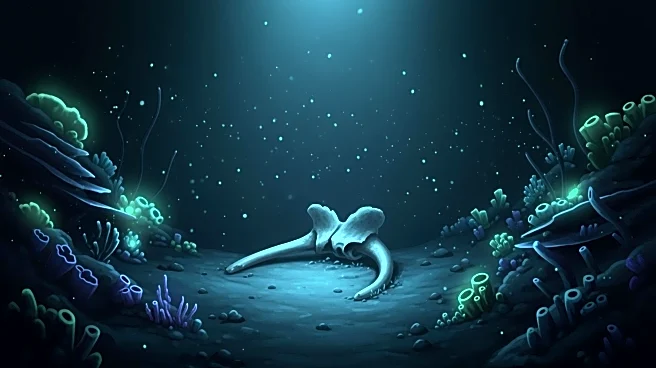
of Ocean Networks Canada and Craig Smith from the University of Hawaii, the study involved placing humpback whale bones on the ocean floor to observe the colonization by these worms, which play a crucial role in breaking down whale bones and supporting deep-sea food webs. Despite over a decade of monitoring, no zombie worms were found, raising alarms about potential disruptions in the ecosystem. The absence is thought to be linked to low oxygen levels in the study area, which is part of a naturally low-oxygen zone in the Pacific Ocean.
Why It's Important?
The absence of zombie worms is significant because these organisms are considered ecosystem engineers, essential for recycling nutrients and facilitating biodiversity in deep-sea environments. Their role in breaking down whale bones is crucial for the ecological succession process, which supports a variety of marine species. The lack of these worms could indicate broader environmental issues, such as expanding oxygen minimum zones due to ocean warming, which may disrupt marine ecosystems. This could lead to a decline in biodiversity and affect the connectivity between whale fall sites, potentially resulting in species loss.
What's Next?
Further research is ongoing, with additional data expected from a whale fall currently being monitored at another site. Scientists are likely to continue investigating the impact of low oxygen levels and other environmental changes on deep-sea ecosystems. The findings could inform conservation strategies and policies aimed at mitigating the effects of climate change on marine biodiversity.
Beyond the Headlines
The study highlights the broader implications of climate change on marine ecosystems, particularly the expansion of oxygen minimum zones. These changes not only threaten specific species like the zombie worm but also have cascading effects on the entire food web. The research underscores the importance of understanding and addressing the impacts of environmental changes on oceanic life, aligning with global sustainability goals.