



What's Happening?
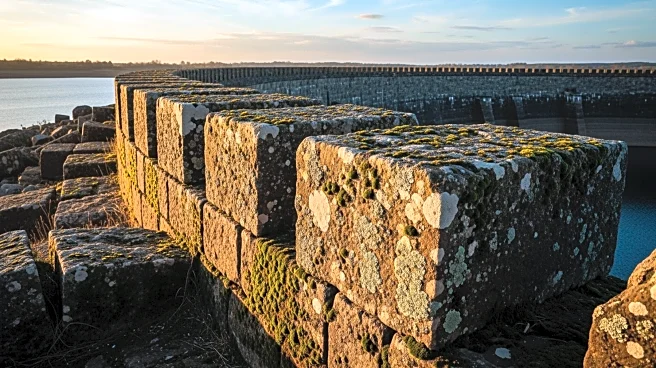
A recent archaeological discovery in Jerusalem has uncovered a massive stone dam dating back to the 9th century B.C.E. This find, located in the City of David, provides insights into ancient water management strategies during periods of drought. The dam,
built rapidly within a decade, was a response to consecutive years of drought that significantly reduced water availability from local springs. This historical context mirrors current global challenges with water scarcity due to climate change. The dam's construction was a monumental effort to ensure water security for Jerusalem's growing population, highlighting the city's innovative approach to managing water resources in arid conditions.
Why It's Important?
The discovery of the dam underscores the long-standing human struggle with water scarcity, a challenge that remains relevant today. As modern cities face similar issues due to climate change, the ancient solutions provide valuable lessons in resource management and urban planning. The historical context of water management in Jerusalem offers a perspective on how societies have adapted to environmental challenges. This is particularly pertinent as contemporary cities worldwide grapple with water shortages exacerbated by climate change, necessitating innovative solutions like desalination and wastewater reclamation. The parallels between past and present highlight the ongoing need for sustainable water management practices.
What's Next?
The findings from the Jerusalem excavation may prompt further research into ancient water management systems and their applicability to modern challenges. As cities continue to face water scarcity, there may be increased interest in historical strategies that could inform current practices. Additionally, the study of ancient climate patterns could enhance our understanding of long-term environmental changes and their impact on human societies. This could lead to more comprehensive approaches to addressing water shortages and climate resilience in urban planning.
Beyond the Headlines
The discovery raises questions about the broader implications of climate-induced water scarcity on social and political stability. Historical examples, such as the drought-induced migration and unrest in Syria, illustrate the potential for environmental challenges to exacerbate societal tensions. Understanding these dynamics is crucial for developing policies that address the root causes of resource scarcity and promote sustainable development. The study of ancient water systems also highlights the importance of interdisciplinary research in addressing complex environmental issues.