



What's Happening?
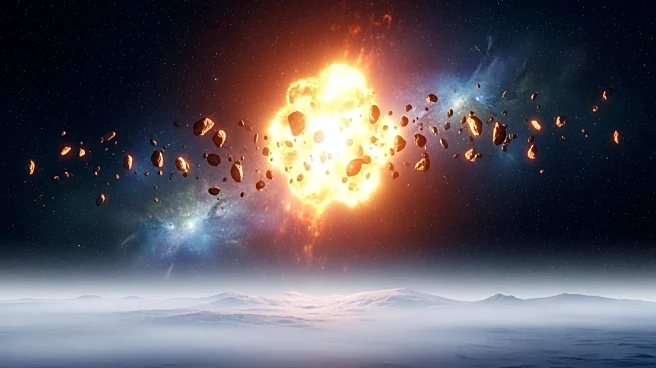
Recent research suggests that a space explosion 13,000 years ago may have caused a sudden climate shift on Earth, known as the Younger Dryas. This period marked a sharp drop in temperatures following a long warming trend, leading to the extinction of
large North American animals like mammoths and the disappearance of the Clovis culture. The study, published in PLOS One, posits that a fragmented comet exploded in the atmosphere above North America, creating an airburst that unleashed heat and pressure, igniting fires and altering climate patterns. Evidence supporting this theory includes unusual materials found in sediment layers, such as tiny metal fragments and shocked quartz, which indicate extreme pressure and heat.
Why It's Important?
This theory provides a potential explanation for the abrupt environmental changes and extinctions at the end of the Ice Age, a topic that has puzzled scientists for decades. Understanding the impact of such cosmic events on Earth's climate and ecosystems can offer insights into current climate change dynamics and the potential risks posed by future space-related phenomena. The findings also highlight the interconnectedness of cosmic events and terrestrial life, emphasizing the need for continued research into Earth's geological history and its implications for modern environmental challenges.
Beyond the Headlines
The lack of an impact crater has been a point of contention for this theory, but researchers argue that the comet likely exploded in the atmosphere, similar to the Tunguska event in 1908. This would spread energy outward rather than downward, explaining the absence of a crater. The study underscores the importance of interdisciplinary research in uncovering Earth's past and the potential for cosmic events to influence evolutionary and cultural shifts. It also raises questions about the resilience of ecosystems and human societies to sudden environmental changes.