





What's Happening?
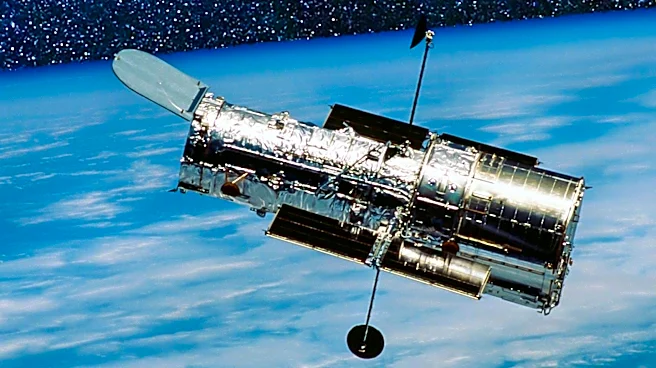
NASA is providing a collection of free downloadable books for individuals interested in space, science, and aeronautics. These resources are available directly from NASA and cover a wide range of topics, including aeronautics, the Hubble Space Telescope,
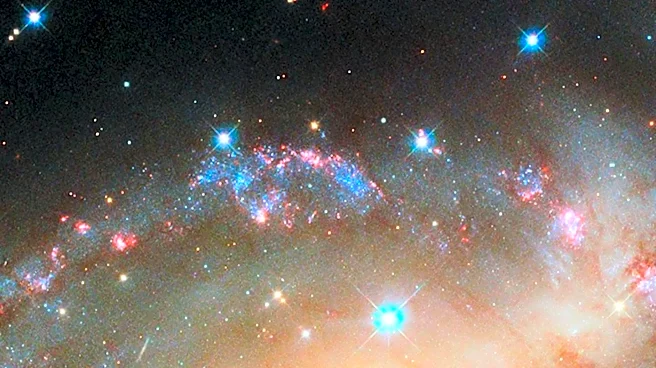
various scientific missions, and NASA's history. The aeronautics section features titles such as 'NASA’s Contributions to Aeronautics' and a book on the X-15 aircraft, along with information on facilities like the giant wind tunnel at Langley. For Hubble enthusiasts, there are books with stunning images, an overview of the telescope, and a focus on gravitational lensing. The science category delves into subjects like black holes, the Landsat program, the Cassini mission, and the Spitzer telescope. Historical accounts include research on near-Earth objects and lessons from the Columbia tragedy. Notably, a book titled 'Archaeology, Anthropology, and Interstellar Communication' is also available. These books are typically offered in EPUB or PDF formats, making them accessible for e-readers.
Why It's Important?
This initiative by NASA is significant as it democratizes access to high-quality scientific and historical information about space exploration and aeronautics. By offering these books for free, NASA promotes STEM education and public engagement, inspiring a new generation of scientists, engineers, and space enthusiasts. It allows individuals, regardless of their financial means, to delve into complex topics and gain a deeper understanding of humanity's endeavors beyond Earth. For researchers and educators, these resources provide valuable primary and secondary source material directly from the leading space agency. The availability of diverse topics, from technical aeronautics to the philosophical implications of interstellar communication, caters to a broad audience, fostering interdisciplinary interest in space. This open-access approach enhances NASA's mission of sharing knowledge and advancing scientific literacy among the public.
What's Next?
The continued availability of free educational resources from NASA is likely to encourage other scientific and governmental organizations to adopt similar open-access policies for their publications. This could lead to a broader movement towards democratizing scientific knowledge and making it more accessible to the global public. For NASA, this initiative could further solidify its role as a leader in public outreach and education, potentially leading to more interactive and multimedia educational content in the future. The popularity of these downloadable books might also influence the publishing industry, encouraging more scientific publishers to consider open-access models for their content. Furthermore, as more people engage with these materials, there could be an increase in public discourse and interest in space exploration, potentially garnering greater support for future missions and scientific research.
Beyond the Headlines
Beyond the immediate educational benefits, NASA's provision of free books taps into a fundamental human curiosity about the cosmos and our place within it. The inclusion of titles like 'Archaeology, Anthropology, and Interstellar Communication' suggests a deeper, more philosophical engagement with space, moving beyond purely technical aspects to explore the cultural and existential implications of space exploration. This approach encourages critical thinking about humanity's future, potential encounters with extraterrestrial life, and the long-term impact of our scientific endeavors. By making such profound topics accessible, NASA fosters a sense of shared human enterprise and responsibility towards understanding the universe. It also subtly reinforces the idea that knowledge, especially scientific knowledge, should be a common heritage, freely shared to benefit all of humanity.