






What's Happening?
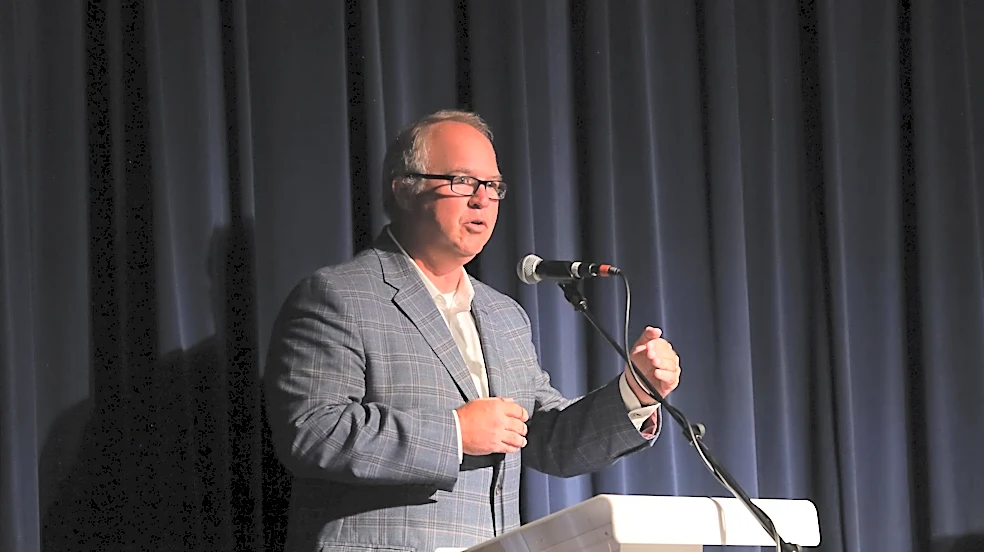
The University of Hartford recently hosted a panel discussion titled 'Local Beats, Vital Streets' in Wilde Auditorium, focusing on the state of local news and the role of community journalism. Moderated by Deepa Fadnis, director of UHart’s digital media
and journalism program and editor of Reporting Hartford, the panel included Hartford Mayor Arunan Arulampalam, Helen Bennett, executive editor of the Hartford Courant, and Stephen Busemeyer, managing editor of the Connecticut Mirror. The discussion addressed the decline of traditional newsrooms, with Mayor Arulampalam noting the absence of full-time reporters in Hartford City Hall, a stark contrast to the 1970s and 80s. The panelists explored why areas like Hartford have become 'news deserts' and debated the tension in newsrooms between covering 'good news' versus 'bad news,' questioning journalism's role in highlighting problems versus celebrating successes. Reporting Hartford, a student-led publication, aims to fill gaps by covering community-level stories often overlooked by mainstream media.
Why It's Important?
The decline of local journalism, particularly in urban centers like Hartford, has significant implications for civic engagement and community cohesion. As traditional news outlets shrink, the public loses access to in-depth reporting on local government, community issues, and events that directly impact their daily lives. This creates 'news deserts,' where residents are less informed about local decisions, potentially leading to reduced accountability for public officials and a less engaged citizenry. The panel's discussion highlights a critical challenge: how to balance public interest with the need for comprehensive, investigative journalism. The emergence of student-led initiatives like Reporting Hartford demonstrates a potential model for revitalizing local news, fostering a new generation of journalists, and ensuring that diverse community stories are told. The quality and accessibility of local news are vital for a healthy democracy, influencing everything from local elections to public policy debates and community development.
What's Next?
The ongoing conversation about the future of local journalism is likely to spur further initiatives and collaborations between academic institutions, community organizations, and existing news outlets. Universities like Hartford may continue to expand programs that support student-led journalism, providing practical experience for aspiring reporters while addressing local information gaps. There could be increased exploration of new funding models for local news, including non-profit structures, community-supported journalism, and philanthropic investments. Additionally, the debate over what constitutes 'news'—whether to prioritize positive community stories or critical reporting on local problems—will likely continue to shape editorial decisions and journalistic ethics. Stakeholders, including local government, businesses, and residents, may become more actively involved in supporting and shaping local news coverage, recognizing its importance for community well-being and democratic function.
Beyond the Headlines
The discussion at the University of Hartford panel touches upon deeper societal shifts beyond just the economics of journalism. The rise of 'news deserts' reflects a broader trend of disengagement from local civic life and a potential erosion of shared community narratives. When local stories go untold, it can lead to a fragmented understanding of community identity and challenges. The panel's exploration of the tension between 'good news' and 'bad news' also highlights a fundamental ethical dilemma in journalism: the responsibility to inform the public about critical issues versus the desire to foster community pride. This tension is exacerbated in an era where digital platforms allow for personalized news consumption, potentially leading to echo chambers and a decline in exposure to diverse perspectives. The long-term implications include a less informed electorate, reduced civic participation, and a weakening of the social fabric that binds communities together. Rebuilding local journalism is not just about reporting facts; it's about revitalizing community dialogue and collective problem-solving.