




What's Happening?
More than 100,000 ethnic Armenians were displaced from Nagorno-Karabakh following Azerbaijan’s military offensive in September 2023. This exodus occurred after a nine-month blockade that severely restricted access to essential supplies, leading to the
dissolution of the region's de facto institutions effective January 1, 2024. Nearly three years later, these displaced individuals face ongoing struggles for permanent housing, stable employment, legal security, and a sense of belonging in Armenia. The Armenian government has introduced a special temporary-protection regime, extended until December 31, 2026, under Government Decision No. 1864-N. This regime allows displaced individuals to apply for Armenian citizenship, though they cannot simultaneously retain the temporary-protection status. Concerns have been raised by Larisa Alaverdyan, Armenia’s first Human Rights Defender, regarding the unresolved legal status of these individuals within the international refugee-protection framework. Some displaced Armenians fear that acquiring Armenian citizenship could lead to the loss of their status as forcibly displaced persons and associated claims and rights. A survey cited by Gegham Stepanyan, former Human Rights Defender of Nagorno-Karabakh, indicates that approximately 35% of displaced Karabakh Armenians are considering leaving Armenia, primarily for Russia, while 65% intend to stay, with half expressing dissatisfaction with their living conditions.
Why It's Important?
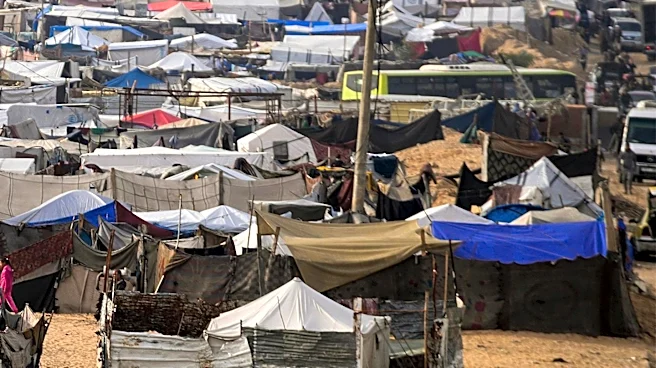
The displacement of over 100,000 ethnic Armenians from Nagorno-Karabakh represents a significant humanitarian crisis with long-term implications for Armenia's social and economic landscape. The challenges in providing adequate housing, employment, and legal certainty for such a large population strain existing resources and infrastructure. The debate surrounding citizenship versus temporary protection highlights a complex legal and identity issue, as individuals weigh the benefits of integration into Armenian society against potential loss of claims related to their displacement. The potential for a significant portion of the displaced population to seek refuge in Russia, despite Russia's perceived failure to protect them during the 2023 offensive, underscores the deep historical and economic ties between Armenia and Russia. This situation could lead to a demographic shift in Armenia and further complicate regional stability. The international community's role in supporting Armenia's integration efforts and addressing the unresolved legal status of these displaced persons is crucial to preventing a prolonged humanitarian crisis and ensuring the dignity and security of those affected.
What's Next?
The temporary-protection regime in Armenia is set to expire on December 31, 2026, necessitating further decisions regarding the long-term status of displaced Nagorno-Karabakh Armenians. The Armenian government will need to continue developing and refining its integration strategies, particularly concerning housing, employment, and social assistance programs, to address the substantial gaps identified by international organizations like UNHCR and the Council of Europe. The ongoing discussions about citizenship and the potential for displaced individuals to lose certain rights upon naturalization will require careful consideration and possibly policy adjustments. Prime Minister Nikol Pashinyan's call for displaced Armenians to obtain citizenship and settle permanently in Armenia suggests a push towards full integration, but this approach has been criticized by civil society activists for potentially abandoning the possibility of a dignified return. The coming years will likely see continued efforts to balance the immediate needs of the displaced population with broader national and international policy objectives.
Beyond the Headlines
The displacement of Nagorno-Karabakh Armenians raises profound questions about self-determination, ethnic cleansing, and the effectiveness of international protection mechanisms. The dissolution of the self-proclaimed Republic of Artsakh, despite its decades-long existence, highlights the fragility of de facto states and the complex interplay of international recognition and geopolitical power. The ethical dilemma faced by displaced individuals—choosing between a secure future in Armenia through citizenship and retaining a distinct identity with potential claims to their ancestral lands—underscores the deep psychological and cultural impact of forced displacement. The situation also exposes the limitations of humanitarian aid when not coupled with comprehensive, long-term integration strategies that address legal, social, and economic needs. The ongoing struggle for these individuals to rebuild their lives, coupled with the unresolved political status of Nagorno-Karabakh, will likely continue to be a source of regional tension and a test of international human rights commitments.