






What's Happening?
The University of New Hampshire (UNH) has been awarded an $8 million grant from the National Science Foundation to conduct extensive research on ticks, the diseases they transmit, and the environments they inhabit. This funding comes at a critical time
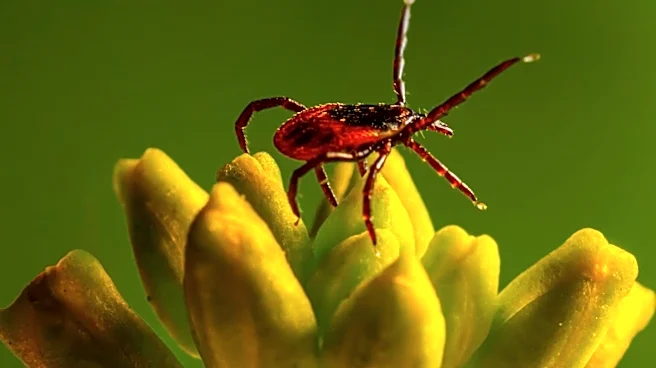
as tick-borne illnesses, such as Lyme disease, are becoming increasingly prevalent, particularly in New Hampshire, which has one of the highest rates of Lyme disease in the United States. The research will focus on three tick species found in the state: the blacklegged or deer tick, the American dog tick, and the winter tick. The initiative, led by David Needle, a clinical professor and senior veterinary pathologist, will involve setting up 22 monitoring stations across New Hampshire to study tick survival, spread, and disease transmission. The project also includes an educational component, engaging undergraduate students from across the state in the research efforts.
Why It's Important?
This research is significant as it addresses the growing public health concern of tick-borne diseases, which affect thousands of people annually. By understanding the behavior and ecology of ticks, the study aims to develop better prevention and control strategies, potentially reducing the incidence of diseases like Lyme disease. The involvement of undergraduate students in the research also provides valuable educational opportunities, fostering the next generation of scientists. The findings could have broader implications for public health policies and wildlife management, particularly in regions where tick populations are expanding due to climate change and other environmental factors.
What's Next?
The research is set to begin at the start of the next peak tick season, with the monitoring stations providing year-round data on tick activity and environmental conditions. The results of this study could inform future public health guidelines and interventions aimed at reducing tick-borne disease transmission. Additionally, the educational component of the project will continue to engage students, potentially leading to further research initiatives and collaborations. Stakeholders, including public health officials and wildlife managers, will likely be interested in the outcomes of this research to enhance their strategies for managing tick populations and mitigating disease risks.