





What's Happening?
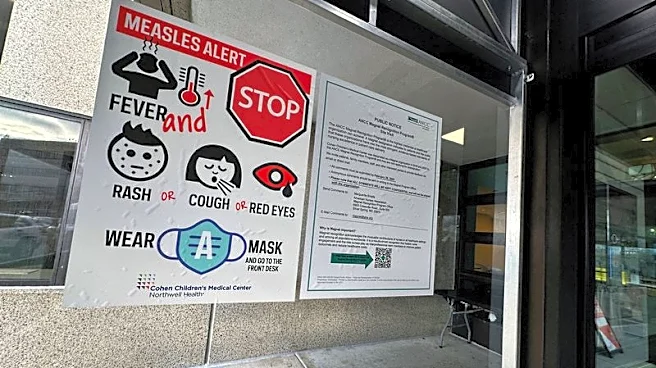
International health experts are currently reviewing data to determine if the United States and Mexico have lost their measles elimination status. This comes as the U.S. is experiencing its worst measles year in decades, with over 5,400 confirmed cases
reported this year, more than double the 2025 tally. Ten measles-associated deaths have been reported in the U.S. this year, marking the highest national death count in over three decades. A significant outbreak in Pennsylvania has largely driven the increase in cases. The Pan American Health Organization (PAHO) advisory commission is examining genetic evidence to ascertain if the same measles virus has been continuously spreading in North America for a year or more. If confirmed, the U.S. would no longer be considered to have eliminated measles, indicating a return to sustained circulation of the virus. Canada lost its measles-free designation last year.
Why It's Important?
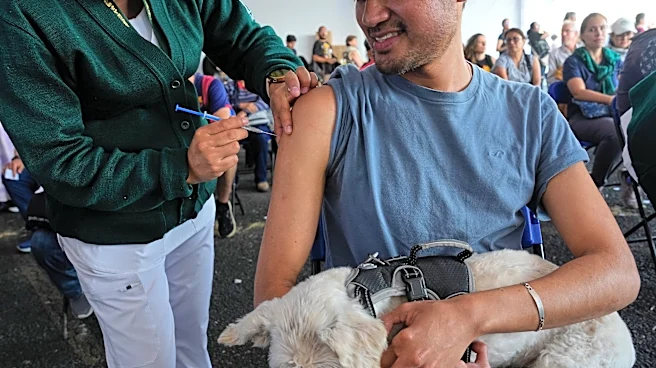
The potential loss of measles elimination status for the U.S. signifies a major public health setback, reversing decades of progress achieved through widespread vaccination campaigns. Measles, a highly contagious disease, can lead to serious complications, including blindness and brain swelling, and is a leading cause of death among young children globally. The resurgence highlights the critical importance of maintaining high vaccination rates, as a 95% vaccination rate is necessary to prevent outbreaks when an infected traveler enters a community. The current situation underscores the vulnerability of communities with lower vaccination rates to infectious diseases that were once largely eradicated in the U.S. This development could strain healthcare systems and necessitate increased public health interventions to control the spread of the virus.
What's Next?
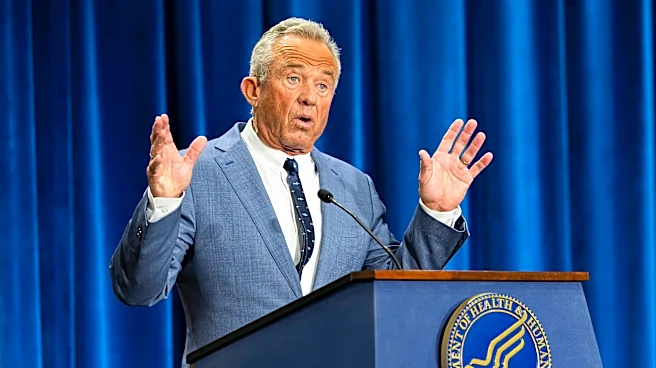
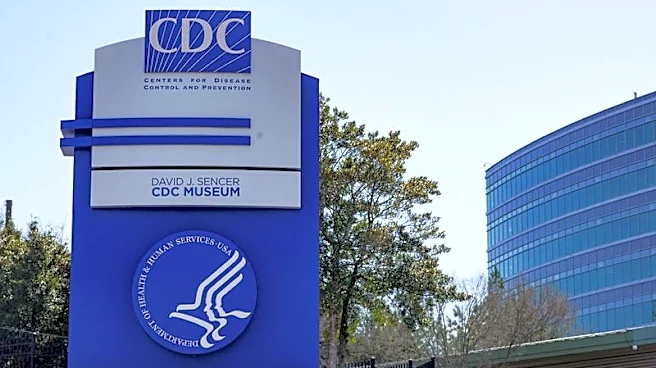
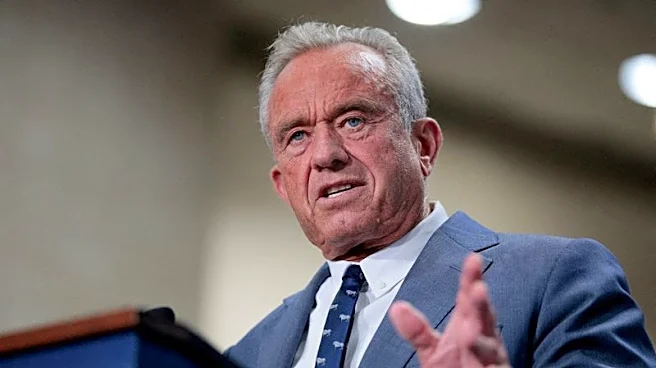
The PAHO advisory commission will present its determination to PAHO Director Dr. Jarbas Barbosa, with an announcement of the findings scheduled for next week. While CDC Director Erica Schwartz stated that a change in designation would not alter the federal approach, many public health experts advocate for a more robust campaign to promote vaccinations and provide guidance to doctors. Concerns have been raised regarding the federal response, particularly in light of U.S. Health Secretary Robert F. Kennedy Jr.'s past stance on vaccines and his actions to downsize the childhood vaccination schedule and reshape a key vaccine advisory board. These actions, which run counter to medical recommendations, could lead to fewer children being fully vaccinated, potentially exacerbating future outbreaks.
Beyond the Headlines
The re-emergence of measles in the U.S. points to deeper societal and political challenges surrounding public health. The decline in vaccination rates, partly fueled by disproven claims about vaccine safety, reflects a growing distrust in scientific consensus and public health institutions. The involvement of high-ranking officials, such as U.S. Health Secretary Robert F. Kennedy Jr., who has been associated with the anti-vaccine movement, adds a political dimension to a critical health issue. This situation could lead to a re-evaluation of public health communication strategies, the role of misinformation in public health crises, and the balance between individual liberties and collective health responsibilities. The long-term implications could include a shift in public perception of vaccine-preventable diseases and a renewed focus on strengthening immunization programs.