



What's Happening?
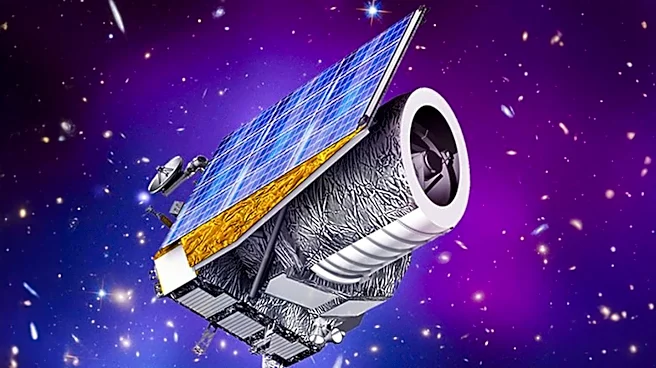
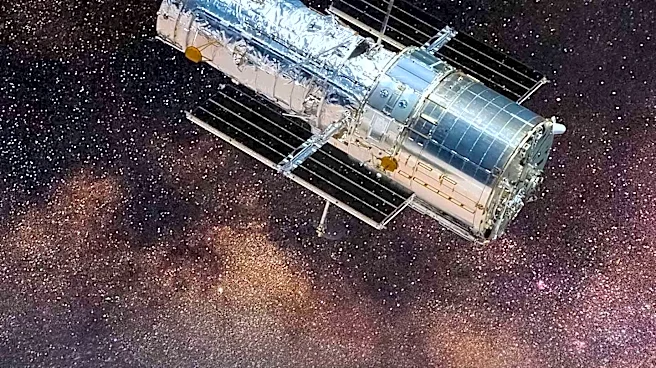
The European Space Agency (ESA) has released a nearly 500-gigapixel mosaic of the northern sky, compiled from observations by its Euclid space telescope. This extensive mosaic is part of Euclid's first major data release, DR1-Foundation, which is based
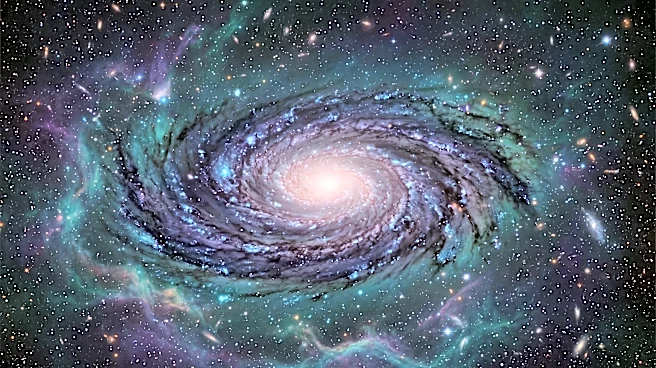
on data collected in autumn 2024 and spring 2025. The mosaic covers 367 square degrees of the northern sky and includes 740 individual observations. A notable feature within this mosaic is the spiral galaxy Messier 81, located approximately 12 million light-years away. Euclid's advanced optics were able to capture individual stars within Messier 81, which is situated at the center of a group of about 38 galaxies. The image combines data from VIS and NISP photometry in Y, J, and H bands, using blue, green, and red channels to represent different wavelengths. Small black rectangular gaps are present in the mosaic, indicating regions intentionally avoided during the survey due to the presence of very bright stars that could interfere with Euclid's sensitive instruments.
Why It's Important?
This release from ESA's Euclid space telescope represents a significant advancement in astronomical data collection and our understanding of the universe. The sheer size and detail of the 500-gigapixel mosaic provide an unprecedented view of the northern sky, offering a rich dataset for scientists worldwide. The ability to resolve individual stars in distant galaxies like Messier 81 will enable more precise studies of stellar populations, galaxy formation, and evolution. This data can help refine cosmological models and shed light on the distribution of matter and dark energy in the universe. For the scientific community, this data release facilitates new discoveries and collaborative research, potentially leading to breakthroughs in astrophysics. The detailed imagery also serves as a powerful educational tool, making complex astronomical phenomena more accessible to the public and inspiring future generations of scientists.
What's Next?
The release of the DR1-Foundation data is expected to spur extensive research and analysis within the astronomical community. Scientists will utilize this massive dataset to study various cosmic phenomena, including galaxy structures, star formation regions, and the properties of dark matter and dark energy. Future data releases from the Euclid mission are anticipated, which will continue to expand the scope of observations and provide even more comprehensive views of the universe. Researchers will likely publish numerous papers based on this data, contributing to a deeper understanding of cosmic evolution. The ESA will continue to process and refine the data, potentially leading to further detailed images and scientific insights. The public can also expect more visualizations and educational materials derived from these observations, enhancing engagement with space science.
Beyond the Headlines
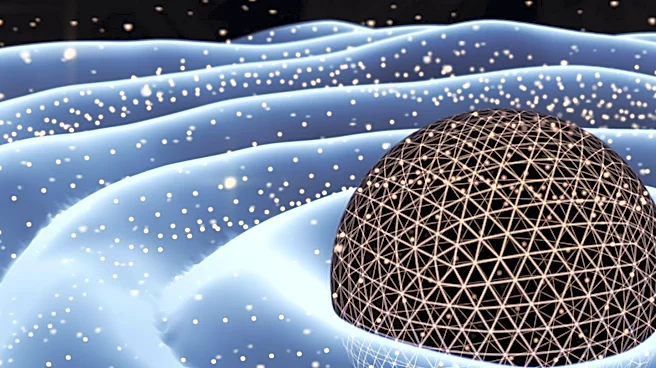
The Euclid mission's detailed mapping of the universe has profound implications beyond immediate scientific discoveries. By providing a clearer picture of the cosmos, it challenges and refines our fundamental theories of physics and cosmology. The mission's focus on dark energy and dark matter, which constitute the majority of the universe's mass-energy content but remain largely mysterious, could lead to a paradigm shift in our understanding of fundamental forces and particles. Ethically, such large-scale scientific endeavors highlight international collaboration and the shared human quest for knowledge. Culturally, these images inspire awe and wonder, reinforcing humanity's place within a vast and complex universe. The technological advancements required for missions like Euclid also drive innovation in various fields, from optics and sensor technology to data processing and artificial intelligence, with potential applications far beyond space exploration.