






What's Happening?
Nebraska Attorney General Mike Hilgers has filed a lawsuit against the City of Omaha concerning its new minimum wage ordinance. The ordinance mandates that employers pay youth employees $15 per hour, which conflicts with the state's recently amended Wage
and Hour Act. The state law, as revised by the Nebraska Legislature, sets the minimum wage for youth employees at $13.50 per hour and establishes a 1.75% annual growth rate for the minimum wage. Hilgers argues that Omaha's ordinance is unconstitutional because it attempts to modify or repeal a statewide law passed by the Legislature. This legal action follows a similar lawsuit against the City of Lincoln, where a court has already enjoined Lincoln from implementing a comparable ordinance. The Attorney General's office asserts that the state constitution does not permit cities to override statewide legislation.
Why It's Important?
This lawsuit highlights a significant legal and political conflict between state and local governance in Nebraska, particularly concerning economic policy. The outcome will determine the extent of home rule authority for cities like Omaha and Lincoln versus the supremacy of state law in matters of minimum wage. For businesses, especially those employing young workers, the differing wage requirements create uncertainty and potential compliance challenges. If Omaha's ordinance is blocked, it reinforces the state's control over labor standards, potentially limiting local efforts to address higher costs of living through increased minimum wages. Conversely, if the city prevails, it could empower other municipalities to enact their own wage policies, leading to a patchwork of regulations across the state. The Attorney General's office also suggests that local ordinances could lead to increased costs of goods and services statewide, impacting consumers and the broader economy.
What's Next?
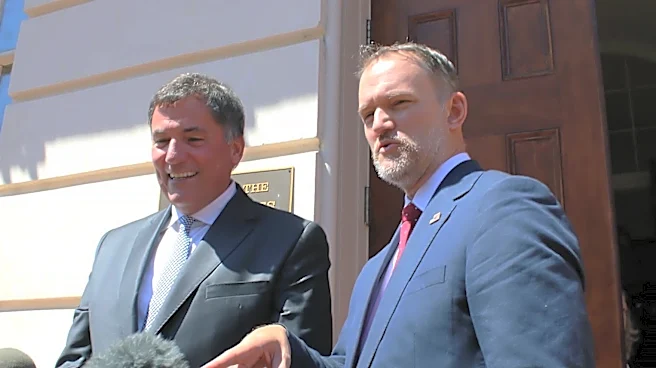
Attorney General Hilgers is seeking a Douglas County District Court judge to block Omaha's minimum wage ordinance, which is scheduled to take effect on October 1. This mirrors the injunction already granted against the City of Lincoln's similar ordinance by a Lancaster County District Judge. The legal proceedings will likely involve arguments regarding the constitutional limits of municipal authority and the interpretation of the State's Wage and Hour Act. The City of Omaha, through its officials like Mayor John Ewing Jr. and City Attorney Matt Kuhse, has expressed confidence in its ability to defend the ordinance, citing its status as a 'home rule charter city' and the higher cost of living in Omaha. The resolution of this case will set a precedent for how local and state minimum wage laws are reconciled in Nebraska.
Beyond the Headlines
The dispute over the minimum wage ordinance in Omaha and Lincoln reflects a broader national debate about the appropriate level of government to set labor standards. While state legislatures often aim for uniformity, local governments frequently argue for the need to address unique economic conditions within their jurisdictions, such as higher living costs in urban centers. This case also touches upon the concept of 'home rule,' which grants certain powers to local governments to manage their own affairs. The legal battle could have long-term implications for the balance of power between state and municipal authorities, potentially influencing future legislative and judicial decisions on a range of issues beyond minimum wage. It also underscores the ongoing tension between business interests, which often prefer consistent statewide regulations, and advocates for workers, who may seek higher local wages to improve living standards.