
What's Happening?
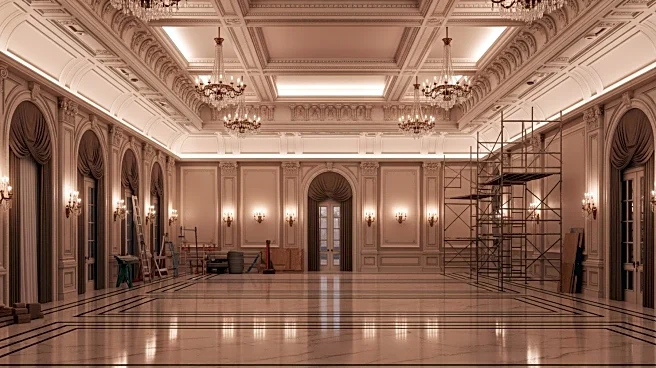
The National Trust for Historic Preservation has faced a setback in its attempt to halt the construction of a new ballroom at the White House. A judge ruled in favor of President Trump, allowing the project
to proceed despite the Trust's concerns about the lack of oversight and public input. The Trust argues that significant changes to historic sites like the White House should involve public consultation and adhere to legal processes. The White House maintains that the 90,000-square-foot ballroom project does not yet require approval from oversight entities, as construction plans are not finalized. The administration has also argued that it is not obligated to file plans with the National Capital Planning Commission (NCPC) before demolition, as the commission's authority is limited to vertical construction.
Why It's Important?
This development highlights the ongoing tension between historic preservation efforts and executive authority. The construction of the ballroom, a $400 million privately financed project, raises questions about the balance of power and the role of public oversight in federal construction projects. The Trust's concerns underscore the potential loss of historical integrity and public input in significant architectural changes to national landmarks. The outcome of this legal battle could set a precedent for how future projects at the White House and other federal sites are managed, potentially impacting the preservation of historic sites across the U.S.
What's Next?
The National Capital Planning Commission is scheduled to review the ballroom project on January 8, with another court hearing set for January 15. These proceedings will determine whether additional oversight or changes to the project will be required. The Trust continues to seek a judicial declaration to enforce pre-demolition requirements, aiming to ensure that future projects undergo thorough review and public consultation. The outcome of these hearings could influence future federal construction policies and the extent of executive authority in altering historic sites.