






What's Happening?
The Trump administration has proposed repealing the Roadless Area Conservation Rule, a federal conservation measure in place since 2001 that protects undeveloped national forest areas from road construction and logging. This rule currently safeguards
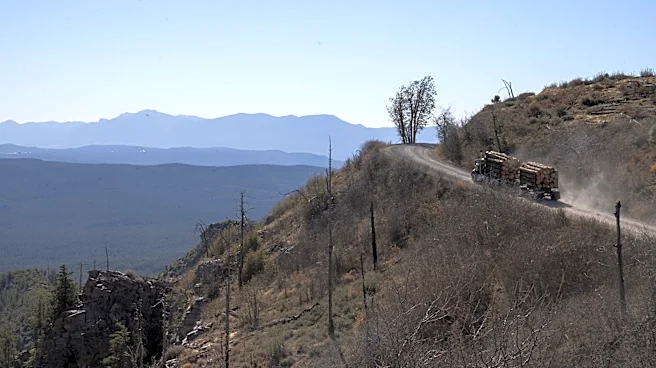
approximately 45 million acres of the 193-million-acre national forest system, primarily in the Western U.S. In Kentucky, the repeal would specifically impact the 2,800-acre Wolfpen tract within the Daniel Boone National Forest, an area bordering the Red River and intersecting with the Sheltowee Trace National Recreation Trail. The U.S. Department of Agriculture, which oversees the Forest Service, supports the repeal, arguing that the Roadless Rule impedes forest management and exacerbates wildfire risk. Agriculture Secretary Brooke Rollins stated that the repeal would restore authority to local forest managers and help return forests to health and productivity. However, conservation advocates, including Kentucky Heartwood, contend that the repeal would lead to fragmentation of protected forestland and increase human-caused wildfires, as most ignitions occur near roads. The public has a 30-day period, until September 21, to comment on the proposed repeal.
Why It's Important?
The potential repeal of the Roadless Rule carries significant implications for environmental conservation, public land management, and local economies across the U.S. The rule protects critical wildlife habitats, preserves water quality by preventing sediment pollution from road construction, and supports non-motorized recreation such as hiking, fishing, and hunting. Its removal could expose previously protected areas to timber harvesting and development, altering the ecological balance and potentially diminishing the natural appeal that draws tourists and supports local businesses, as seen in areas like Kentucky's Red River Gorge. The debate also highlights a fundamental conflict between conservation efforts and the timber industry's desire for increased access to resources, as well as motorized recreation interests. Furthermore, the administration's argument that the repeal will reduce wildfire risk is contested by scientists and conservationists, who point to research indicating that most wildfires are human-caused and occur near roads, suggesting that increased road access could paradoxically heighten fire danger. The move also reflects a broader shift in federal land management policy, prioritizing resource extraction and local control over national conservation mandates.
What's Next?
The public comment period for the proposed repeal of the Roadless Rule is open until September 21. Following this, the Trump administration will review the comments before making a final decision. Conservation groups, such as Kentucky Heartwood, have indicated that legal challenges are likely if the repeal proceeds, potentially leading to prolonged court battles. Congressional Democrats previously introduced legislation to codify the Roadless Rule's protections into federal law, though this bill has not advanced. The U.S. Forest Service is also undergoing a significant reorganization, including staff reductions and the relocation of its headquarters, which could impact its capacity to manage these changes effectively. The outcome of this repeal will determine the future management of millions of acres of national forestland, influencing decisions on logging, road construction, and recreational access for decades to come. Stakeholders, including environmental organizations, timber companies, and local communities, will continue to advocate for their respective interests.
Beyond the Headlines
The debate surrounding the Roadless Rule repeal extends beyond immediate environmental and economic concerns, touching upon deeper philosophical questions about the purpose of national forests and the balance between preservation and utilization. The rule's original intent was to safeguard the 'wildest, least-disturbed parts' of national forests, recognizing their intrinsic value for biodiversity, ecosystem services, and wilderness experiences. The proposed repeal, framed by the Department of Agriculture as restoring local management authority, raises questions about the appropriate level of federal oversight versus state and local control in managing national resources. Critics argue that devolving such decisions could lead to a patchwork of inconsistent policies and increased pressure from commercial interests. Moreover, the discussion about wildfire risk highlights the complex and often politicized nature of forest management science, with different interpretations of data used to support opposing policy positions. This move could set a precedent for future environmental policy, potentially weakening protections for other federal lands and shifting the long-term trajectory of U.S. conservation efforts.