






What's Happening?
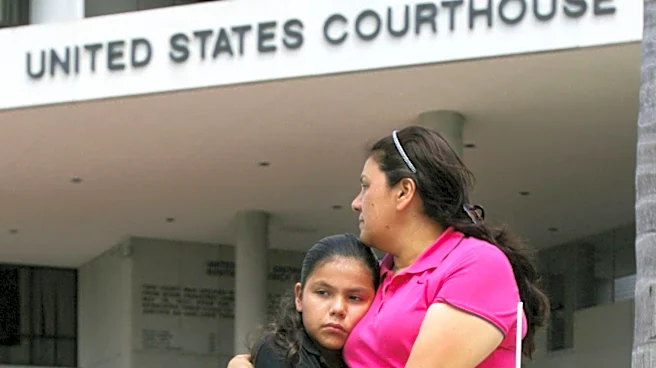
Immigration judges across the U.S. are rapidly processing removal cases for unaccompanied migrant children, often giving them as little as three weeks to find legal representation and prepare their asylum applications. This accelerated timeline is a significant
departure from the previous practice of granting three to six months. For example, a Guatemalan teen was given less than two weeks to explain in English why he feared returning to his home country, despite not knowing English and appearing without a lawyer. This push for speed comes from directives within the Department of Justice's Executive Office for Immigration Review (EOIR) to limit delays and reduce the case backlog. Critics, including immigration lawyers and former judges, argue that this expedited process compromises the children's right to due process and their ability to secure legal counsel, potentially leading to deportations without fair hearings.
Why It's Important?
The rapid acceleration of unaccompanied migrant children's removal cases has significant implications for their legal rights and welfare. Federal protections, including the Trafficking Victims Protection Reauthorization Act, mandate access to pro bono legal counsel for these children. The current expedited process, however, makes it exceedingly difficult for children, many of whom do not speak English or understand the legal system, to find representation and adequately present their cases. This can lead to 'in absentia' removal orders, where children are deported for missing court dates they may not have understood or been able to attend. The emphasis on speed over due process raises concerns about the U.S.'s adherence to international and domestic legal standards for child protection and asylum seekers. It also places immense pressure on newly hired immigration judges, some with limited immigration law experience, to prioritize case completion over thorough adjudication, potentially leading to unjust outcomes.
What's Next?
Immigration lawyers and advocacy groups are expected to continue challenging these expedited proceedings, arguing that they violate the due process rights of unaccompanied minors. They will likely push for longer continuances to allow children sufficient time to secure legal representation and prepare their cases. The Department of Justice's EOIR maintains that it prioritizes timely case completion to prevent cases from languishing, but it faces increasing scrutiny over the balance between efficiency and fairness. The long-term consequences could include a higher rate of deportations for unaccompanied children, potentially sending them back to dangerous situations. There may also be increased litigation and calls for legislative action to ensure that the rights of these vulnerable individuals are protected within the immigration court system. The ongoing debate will likely focus on finding a balance between managing the immigration court backlog and upholding fundamental legal protections.
Beyond the Headlines
The expedited processing of migrant children's cases highlights a deeper tension between administrative efficiency and humanitarian concerns within the U.S. immigration system. The focus on reducing backlogs, while seemingly practical, can overshadow the unique vulnerabilities of children who have often experienced trauma and lack the capacity to navigate complex legal proceedings. This approach raises ethical questions about the state's responsibility to protect children, regardless of their immigration status, and whether the current system adequately reflects these obligations. The potential for children to be deported without a fair hearing could have lasting psychological and social impacts on them, as well as broader implications for the U.S.'s reputation as a defender of human rights. It also underscores the critical role of legal aid and advocacy in ensuring that the most vulnerable populations have a voice and access to justice within a system that is increasingly under pressure.