






What's Happening?
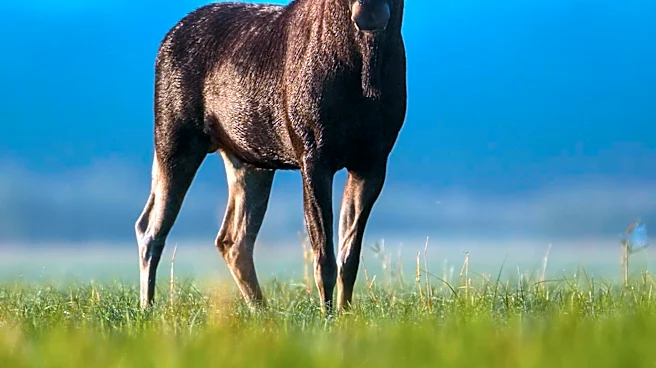
A free-ranging moose in Wyoming has tested positive for Chronic Wasting Disease (CWD), as confirmed by the Game and Fish’s Wildlife Health Laboratory and the Wyoming State Veterinary Laboratory. This incident marks the second time CWD has been detected
in a free-ranging moose within the state. The animal was reported by a member of the public on September 2, after it was observed to suddenly collapse and die. A field necropsy conducted by Game and Fish Veterinary Services revealed the moose was in poor body condition and showed signs of a possible bacterial infection. Additional diagnostic tests are currently underway to gather more information about the animal's overall health prior to its death. The first documented case of CWD in a Wyoming moose occurred in 2008 in Moose Hunt Area 23 near Bedford.
Why It's Important?
The detection of CWD in another free-ranging moose in Wyoming is significant for wildlife management and public health considerations. CWD is a neurological disease affecting cervids, including moose, deer, and elk, and is always fatal. While there is no direct evidence of CWD transmission to humans, public health agencies advise caution and recommend against consuming meat from infected animals. This second case could prompt increased surveillance and testing efforts by the Wyoming Game and Fish Department to monitor the spread of the disease within the state's moose population. The presence of CWD can impact hunting regulations, wildlife population health, and the ecological balance of affected areas. Hunters and wildlife enthusiasts may face stricter guidelines or recommendations to prevent further transmission and ensure the safety of game meat.
What's Next?
Following this confirmed case, the Wyoming Game and Fish Department will likely continue with additional diagnostic tests to understand the full health status of the deceased moose. This information will contribute to ongoing research and monitoring efforts regarding CWD in Wyoming. The department may also intensify its CWD surveillance programs, particularly in the region where the infected moose was found, to assess the prevalence and distribution of the disease. Public awareness campaigns might be launched or reinforced to educate hunters and the general public about CWD, its risks, and the importance of reporting sick or deceased wildlife. Depending on the findings, there could be adjustments to hunting seasons, tag allocations, or carcass disposal regulations to mitigate the spread of CWD among wildlife populations.
Beyond the Headlines
The recurring presence of CWD in Wyoming's moose population highlights a broader ecological challenge facing wildlife across North America. CWD is a prion disease, similar to mad cow disease, and its persistence in the environment poses long-term management difficulties. The disease can remain infectious in soil for extended periods, making eradication extremely challenging. This situation raises ethical questions about human intervention in wildlife disease management, the balance between conservation efforts and recreational hunting, and the potential for environmental contamination. The long-term implications could include shifts in wildlife demographics, changes in ecosystem dynamics, and ongoing debates about the safety of wild game consumption, even as scientific understanding of CWD continues to evolve.