


What's Happening?
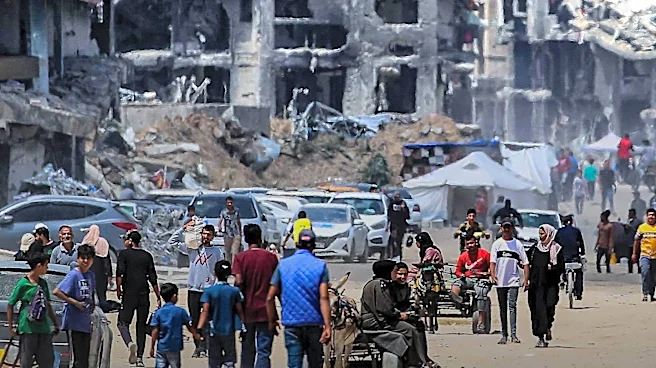
Hamas has accused Israel of attempting to conceal evidence of genocide in the Gaza Strip by removing, crushing, and relocating rubble. According to Hamas, the debris may contain the bodies of thousands of missing Palestinians and material evidence of alleged
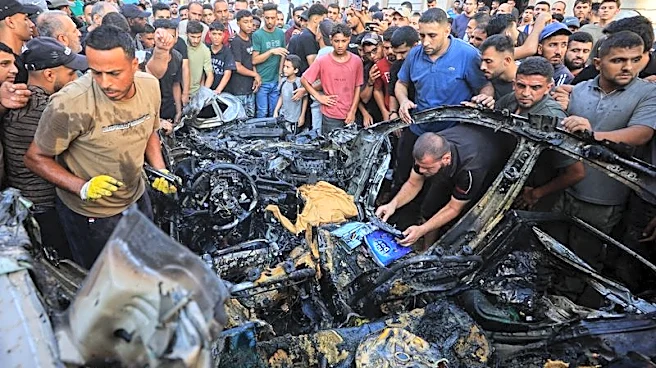
genocide crimes. This accusation follows reports from the Euro-Mediterranean Human Rights Monitor, which stated that Israeli trucks have been removing rubble from Gaza daily, with approximately 400 demolition, crushing, and transportation machines operating in the eastern and southern parts of the enclave. UN Special Rapporteur on human rights in the Palestinian territories, Francesca Albanese, has also warned that such actions could erase traces of grave crimes. Hamas has called on the UN, the International Criminal Court, and other relevant bodies to protect these sites and allow international investigative teams and forensic experts into Gaza to monitor the search for bodies and preserve evidence. The group emphasizes the urgent humanitarian need for rubble clearance and reconstruction but insists that these efforts must ensure the recovery of missing persons and the preservation of evidence.
Why It's Important?
This development carries significant international legal and humanitarian implications. If evidence of alleged war crimes or genocide is indeed being destroyed, it could severely impede future accountability efforts and investigations by international bodies like the International Criminal Court. The accusations by Hamas, supported by warnings from a UN Special Rapporteur, highlight a critical concern regarding the integrity of potential crime scenes and the rights of victims' families to find and bury their loved ones. The ongoing removal of rubble without proper oversight could be seen as a violation of international law and the International Court of Justice's order on preserving evidence. This situation also exacerbates the humanitarian crisis in Gaza, where thousands are still missing, and the ability to identify and recover remains is crucial for closure and justice. The lack of transparency and access for international experts could further fuel tensions and distrust, complicating any future peace or reconstruction efforts in the region.
What's Next?
Hamas has urged the UN, the International Criminal Court, and other relevant bodies to take immediate action to protect sites in Gaza and allow international investigative teams and forensic experts to enter the territory. This call suggests a push for greater international involvement and oversight in the rubble removal and reconstruction processes. The UN Special Rapporteur's warnings may prompt further discussions and resolutions within international forums regarding the preservation of evidence in conflict zones. It remains to be seen whether Israel will respond to these calls for increased transparency and access for international experts. The ongoing removal of rubble, coupled with the severe shortage of construction supplies, indicates that the humanitarian and reconstruction challenges in Gaza will persist, potentially leading to continued calls for international intervention and aid. The focus will likely remain on ensuring that reconstruction efforts do not inadvertently destroy crucial evidence and that the dignity of the deceased and their families is respected.
Beyond the Headlines
The controversy surrounding rubble removal in Gaza extends beyond immediate humanitarian concerns, touching upon deeper ethical and legal dimensions of post-conflict accountability. The destruction or concealment of evidence, whether intentional or not, can undermine the very foundation of international justice and the pursuit of truth for victims of conflict. This situation raises questions about the responsibilities of occupying powers or parties to a conflict to preserve potential crime scenes and cooperate with international investigations. Furthermore, the act of removing rubble without proper forensic examination can be perceived as an attempt to erase the narrative of suffering and loss, impacting the collective memory and historical record of the conflict. The struggle to recover bodies and preserve evidence in Gaza highlights the broader challenge of achieving justice and reconciliation in deeply entrenched conflicts, where political agendas often intersect with humanitarian imperatives and legal obligations.