








What's Happening?
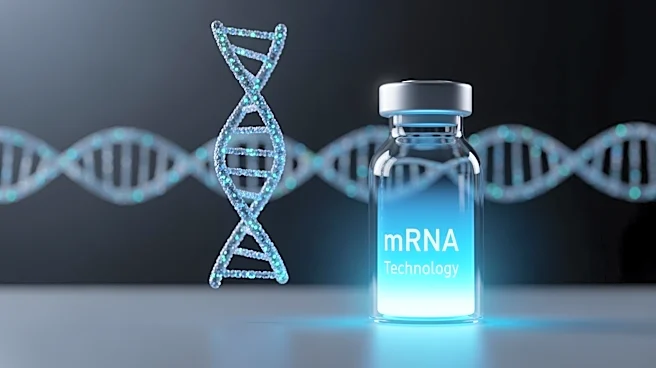
Researchers from the University of Houston, MIT, and Harvard have developed a novel mRNA-based strategy that significantly enhances the T-cell response to vaccines. This advancement could lead to more effective cancer vaccines and improved protection
against infectious diseases. The new approach involves reprogramming immune cells using mRNA instructions to expand cancer-fighting T cells. The adjuvant, created with mRNA molecules, delivers instructions for immune-related genes IRF8 and NIK, activating key immune pathways. In mouse studies, this mRNA-encoded adjuvant enabled the immune system to eradicate tumors in various cancer models, either alone or with a tumor antigen. The adjuvant also boosted T-cell responses to vaccines against influenza and Covid-19. The research, led by Akash Gupta, was published in Nature Biotechnology and funded by Sanofi, the National Institutes of Health, and other institutions.
Why It's Important?
This development is significant as it represents a potential breakthrough in cancer treatment and vaccine efficacy. By enhancing the body's natural immune response, this mRNA strategy could lead to more effective cancer immunotherapies and vaccines for infectious diseases. The ability to reprogram immune cells from within offers a novel approach to cancer treatment, potentially improving outcomes for patients with various types of cancer. Additionally, the enhanced T-cell response could lead to more robust protection against viruses like influenza and Covid-19, addressing significant public health challenges.
What's Next?
The researchers plan to further evaluate this mRNA platform in additional cancer models and conduct clinician-guided translational studies. The goal is to develop new mRNA-based approaches for cancer treatment and infectious disease vaccines. This could involve collaborations with pharmaceutical companies and clinical trials to test the efficacy and safety of these new vaccines in humans.