







What's Happening?
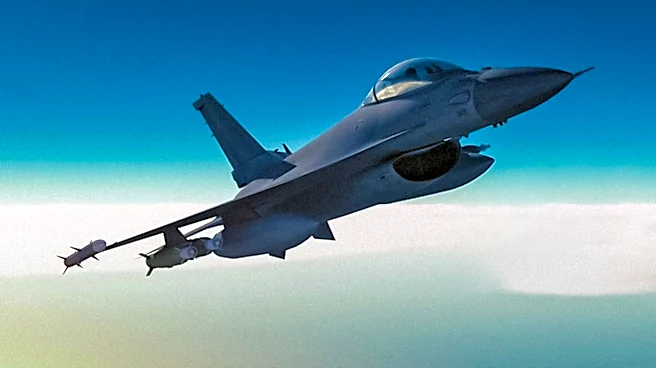
The U.S. Air Force is employing F-16 Fighting Falcons for autonomous flight testing as part of the Viper Experimentation and Next-generation Operations Model (VENOM) program. This joint initiative between DARPA and the U.S. Air Force aims to advance artificial
intelligence in aerial combat. A group of F-16s has been modified to fly autonomously, with a VENOM Autonomy Kit interfacing with the aircraft's mission systems and flight controls. This allows pilots to switch between human and AI control instantly. Brigadier General James Valpiani, a DARPA program manager, stated that these tests are crucial for developing trusted, autonomous air combat capabilities. The F-16 was chosen due to its maturity, robust industrial base, maneuverability, and extensive support infrastructure, making it an economical and practical choice for training AI algorithms in real-world flight scenarios. The program focuses on integrating AI into existing operational aircraft without altering core software, providing an efficient pathway for innovation in aerial combat.
Why It's Important?
This development is significant for the future of U.S. military aviation and national security. By testing autonomous flight in F-16s, the Air Force is laying the groundwork for next-generation combat aircraft that can operate with or be assisted by artificial intelligence. The ability to integrate AI into existing platforms like the F-16 demonstrates a cost-effective approach to modernizing the fleet and enhancing operational capabilities. This could lead to the development of cheaper, uncrewed aircraft capable of scouting, carrying diverse weaponry, and complicating adversary defense calculations. The program addresses the increasing complexity of aerial combat by exploring how AI can assist in managing this complexity, making split-second decisions, and ultimately improving the effectiveness of U.S. air power. The focus on real-world flight data, rather than simulations, is critical for developing reliable and trustworthy combat AI.
What's Next?
The VENOM program will continue to conduct flight tests with the modified F-16s, gathering valuable data to inform future AI research under DARPA's Artificial Intelligence Reinforcements program. The goal is to evaluate multiple AI-piloted aircraft simultaneously, which will likely influence the development of future unmanned programs, including the broader Collaborative Combat Aircraft initiative. While the current effort is not intended to eliminate crewed F-16s, it aims to establish a methodology for developing and validating autonomous aircraft. This will pave the way for future combat aircraft that are either fully autonomous or heavily AI-assisted, extending the operational lifespan and capabilities of the U.S. Air Force's fleet. The insights gained from VENOM are expected to contribute to the creation of war-deterring and war-winning capabilities for U.S. warfighters.
Beyond the Headlines
The use of AI in combat aircraft raises profound ethical and legal questions regarding the role of autonomous systems in warfare. While the current F-16 tests involve a pilot on board who can take over, the long-term vision of fully autonomous combat aircraft necessitates a robust framework for accountability and decision-making. The development of AI that can make 'split-second decisions' in combat scenarios, as mentioned by General Valpiani, highlights the need for careful consideration of human oversight and control. Furthermore, the program's success could trigger a global arms race in AI-powered military technology, compelling other nations to accelerate their own autonomous combat system development. This shift could redefine the nature of aerial warfare, potentially leading to conflicts fought with less human intervention and greater reliance on algorithmic decision-making, with implications for international stability and the laws of armed conflict.