




What's Happening?
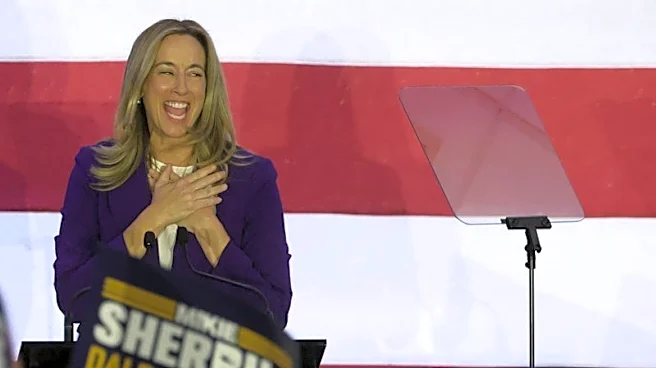
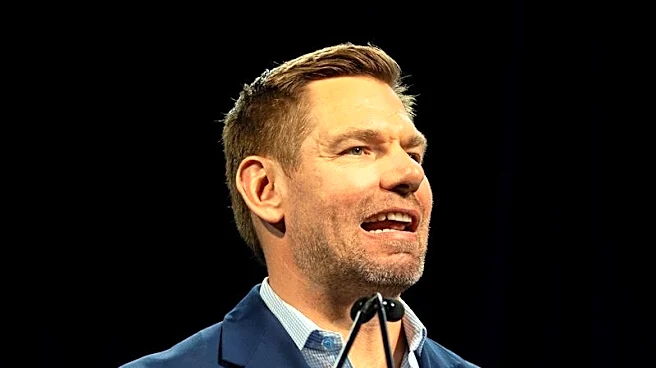
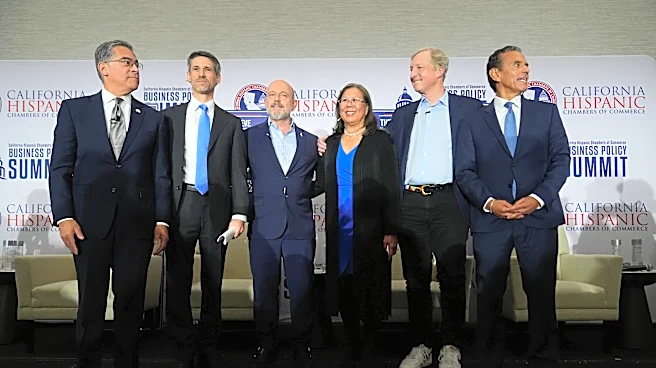
The California Democratic Party is experiencing a leadership vacuum in the gubernatorial race following Rep. Eric Swalwell's exit. With seven major candidates still in the race, the party is struggling to consolidate support behind a single candidate.
Key figures like Governor Gavin Newsom and former House Speaker Nancy Pelosi have refrained from endorsing or influencing the race, leaving the field open and competitive. Party Chair Rusty Hicks has faced criticism for not taking a more active role in narrowing the candidate pool, relying instead on polls and urging candidates to assess their viability. The lack of a clear frontrunner has raised concerns about the possibility of two Republicans advancing in the top-two primary system, which could lock Democrats out of the general election.
Why It's Important?
The crowded Democratic field in California's governor race highlights internal party challenges and the potential risks of a fragmented vote. Without a clear leader, the party risks diluting its electoral strength, which could lead to a Republican advantage in a traditionally Democratic stronghold. This situation reflects broader issues within the party regarding leadership and strategy, particularly in managing open primaries. The outcome of this race could influence the party's approach to future elections and its ability to maintain control in key states.
What's Next?
As the primary approaches, Democratic candidates will need to intensify their campaigns to stand out in a crowded field. Party leaders may face increasing pressure to intervene and guide the race towards a more unified front. The results of ongoing polls and candidate performances in debates could shift dynamics, potentially leading to strategic withdrawals or endorsements. The party's handling of this race could set a precedent for managing similar situations in other states.