
What's Happening?
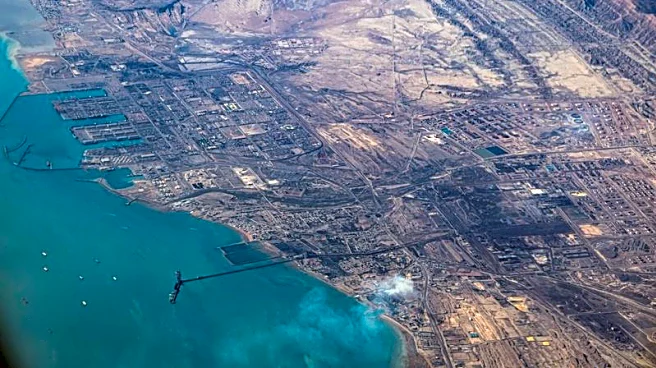
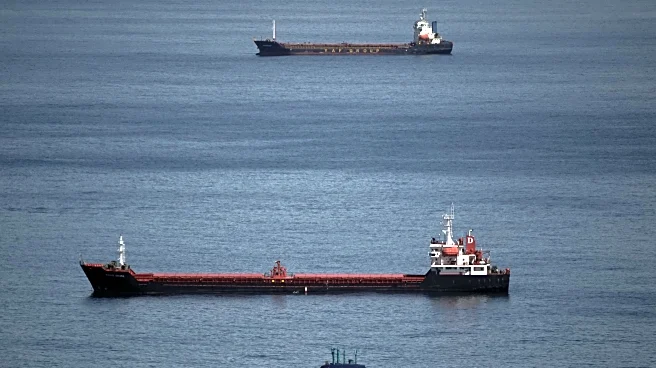
Iran's Revolutionary Guards have reportedly issued VHF transmissions to vessels, stating that no ship is allowed to pass through the Strait of Hormuz. This information was relayed by an official from the European Union's naval mission Aspides. The Strait of Hormuz is a critical
maritime corridor, serving as the world's most vital oil export route. It connects major Gulf oil producers, including Saudi Arabia, Iran, Iraq, and the United Arab Emirates, with the Gulf of Oman and the Arabian Sea. Despite the transmission, Iran has not formally confirmed any orders restricting ship passage. Historically, Tehran has threatened to block this narrow waterway in retaliation for perceived aggression against the Islamic Republic.
Why It's Important?
The Strait of Hormuz is a strategic chokepoint in global oil transportation, accounting for approximately 20% of the world's oil shipments. Any disruption in this region could have significant implications for global energy markets, potentially leading to increased oil prices and economic instability. The reported restriction by Iran's Revolutionary Guards highlights ongoing geopolitical tensions in the region, which could affect international trade and energy security. Countries reliant on oil exports through this route, such as those in the Gulf, may face economic challenges if the passage remains restricted.
What's Next?
The international community, particularly countries dependent on oil shipments through the Strait of Hormuz, will likely monitor the situation closely. Diplomatic efforts may be initiated to ensure the free passage of vessels and to prevent any escalation of tensions. Shipping companies and maritime authorities might consider alternative routes or increased security measures to mitigate potential risks. The situation could prompt discussions among global leaders about ensuring the security of critical maritime corridors.
Beyond the Headlines
The incident underscores the broader geopolitical dynamics in the Middle East, where regional power struggles and historical rivalries often impact global economic interests. The Strait of Hormuz has long been a focal point of strategic military considerations, and its security is crucial for maintaining stability in global oil markets. The potential for conflict in this region raises questions about the effectiveness of international maritime law and the role of global powers in safeguarding critical trade routes.