

What's Happening?
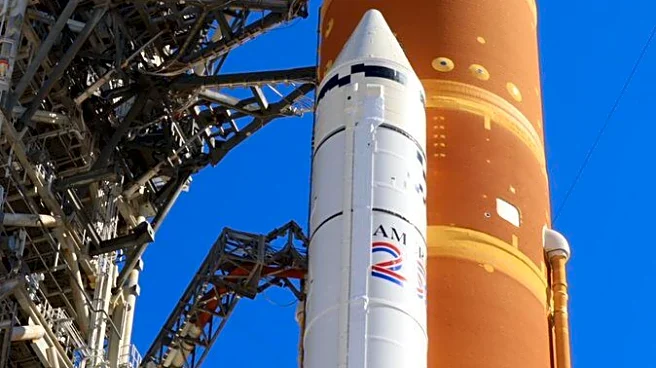
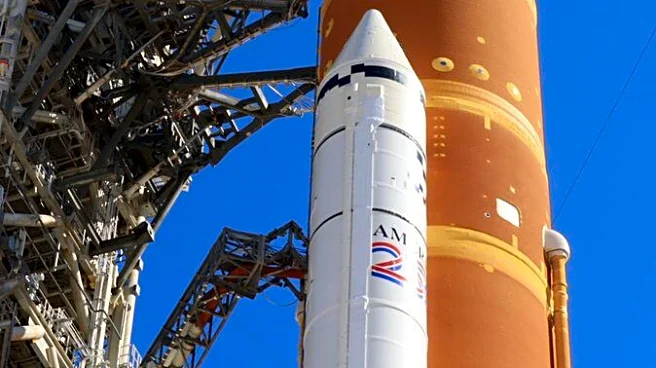
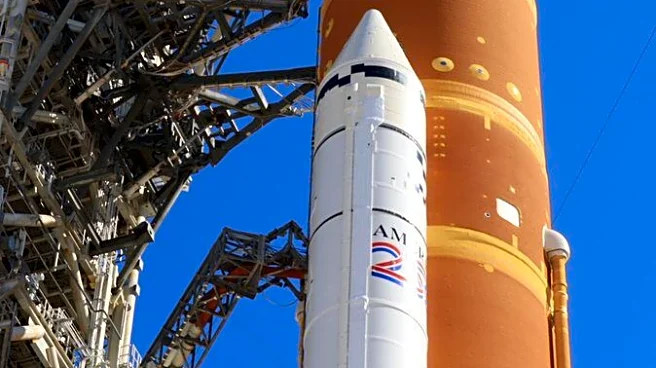
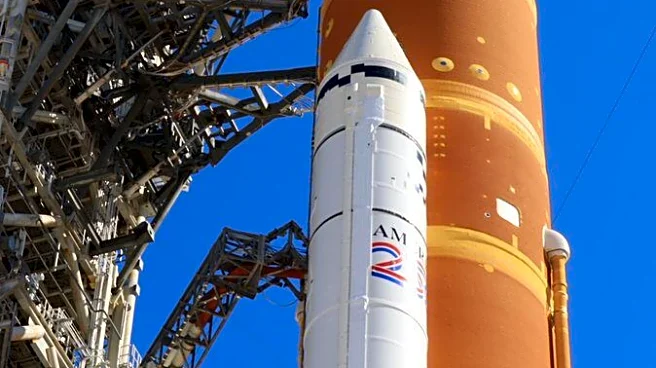
NASA has announced a delay in the launch of the Artemis II mission, originally scheduled for early March, due to a helium flow issue in the Space Launch System (SLS) rocket. The problem was identified during routine operations to repressurize the system,
necessitating the rocket's removal from its launch pad in Florida for repairs. The SLS rocket will be transported back to the Vehicle Assembly Building (VAB) for further examination and necessary fixes. This development follows a previous delay caused by a hydrogen leak, which was resolved after replacing seals in the fueling line. Despite successful fueling tests, the helium issue has now pushed the launch window to April at the earliest.
Why It's Important?
The delay of the Artemis II mission is significant as it impacts NASA's timeline for returning humans to the Moon. The Artemis program is a critical component of NASA's long-term goals for lunar exploration and eventual Mars missions. Delays in such high-profile missions can affect international partnerships, funding, and public interest. The helium system issue highlights the technical challenges involved in space exploration, emphasizing the need for rigorous testing and problem-solving. The setback may also influence the schedules of other missions reliant on the SLS rocket, potentially affecting the broader space exploration agenda.
What's Next?
NASA will focus on diagnosing and fixing the helium system issue within the VAB. The space agency will prepare for a potential launch in April, contingent on successful repairs and subsequent testing. Stakeholders, including international partners and contractors, will closely monitor the situation, as further delays could impact collaborative projects. NASA's ability to address these technical challenges efficiently will be crucial in maintaining momentum for the Artemis program and securing future funding and support.