






What's Happening?
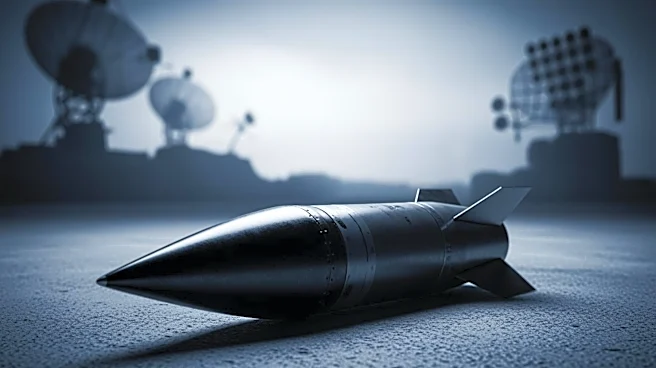
North Korea has reportedly developed a nuclear arsenal capable of breaching U.S. missile defense systems, according to recent assessments. The country, a close ally of Russia, has been expanding its nuclear capabilities, with estimates suggesting it could
produce up to 20 nuclear warheads annually. This development follows a new defense treaty between North Korea and Russia, which includes military support and food supplies from Russia in exchange for ammunition. North Korea's intercontinental ballistic missiles, such as the Hwasong-15 and Hwasong-19, are believed to be capable of penetrating U.S. defenses, raising concerns about the potential for a limited nuclear strike. Analysts warn that North Korea's growing confidence in its nuclear delivery systems marks a significant escalation in the threat it poses.
Why It's Important?
The expansion of North Korea's nuclear capabilities represents a significant challenge to U.S. national security and the strategic balance in the region. The potential for North Korea to conduct a nuclear strike, even a limited one, could destabilize the Asia-Pacific region and strain U.S. alliances with countries like South Korea and Japan. The increased capability of North Korea's missile systems to reach U.S. territory also raises the stakes for U.S. defense policy and military preparedness. This development underscores the need for continued diplomatic efforts and potential adjustments in U.S. missile defense strategies to address the evolving threat.
What's Next?
The U.S. may need to reassess its defense posture in the Asia-Pacific region, potentially increasing military presence or enhancing missile defense systems. Diplomatic efforts to engage North Korea in denuclearization talks could be intensified, although past negotiations have often stalled. The international community, including the United Nations, may also consider additional sanctions or diplomatic measures to curb North Korea's nuclear ambitions. The situation requires careful monitoring to prevent escalation and ensure regional stability.