







What's Happening?
U.S. Representatives Young Kim (R-CA) and Joyce Beatty (D-OH), co-chairs of the House Financial Literacy and Wealth Creation Caucus, have introduced a congressional resolution to designate October 2026 as 'National Financial Planning Month.' The resolution,
House Resolution 1640, aims to increase public awareness about the importance of financial planning and the role of CERTIFIED FINANCIAL PLANNER™ professionals. According to CFP Board, the initiative seeks to address concerns about rising costs, money scams, and economic instability by promoting financial education. The resolution encourages activities such as public seminars on budgeting, saving, and retirement planning, as well as the expansion of financial education in schools and colleges. It also supports pro bono financial planning services for underserved communities, noting that CFP® professionals provided 433,390 hours of such services in 2025.
Why It's Important?
This resolution is important because it highlights a national effort to improve financial literacy and security for all Americans amidst growing economic challenges. With families struggling with rising costs and the need to save for retirement, financial education is deemed more critical than ever. By designating a specific month, the resolution aims to create a concentrated period of awareness and action, encouraging individuals to make informed financial decisions. The emphasis on expanding financial education in schools and colleges could equip future generations with essential money management skills, potentially reducing financial vulnerability. Furthermore, supporting pro bono services ensures that financial guidance is accessible to economically vulnerable families, fostering greater equity in financial well-being across the nation.
What's Next?
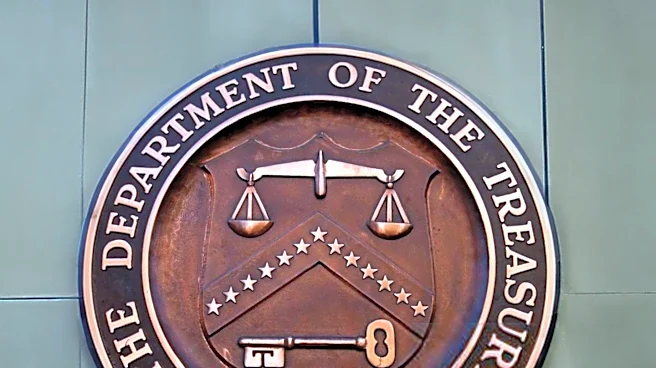
The resolution urges Americans to observe 'National Financial Planning Month' through various outreach and awareness initiatives. This includes public seminars and workshops on budgeting, saving, credit use, investing, and retirement planning. Educational institutions are encouraged to incorporate financial education courses into their curricula. The resolution also supports the efforts of the U.S. Department of the Treasury and the Financial Literacy and Education Commission to develop a national strategy on financial education. Major stakeholders, including financial planning organizations like CFP Board, are expected to lead and participate in these initiatives, offering resources and guidance to the public. The goal is to foster a more financially literate populace, leading to stronger families, communities, and a more robust economy.
Beyond the Headlines
Beyond the immediate goal of raising awareness, this initiative could trigger long-term shifts in how financial education is integrated into American society. By advocating for financial literacy in schools, the resolution addresses a systemic gap in education, potentially creating a generation more adept at managing personal finances. The focus on pro bono services also underscores an ethical dimension, promoting the idea that financial security should not be exclusive to the wealthy. This could lead to increased demand for accessible financial advice and potentially influence public policy towards greater support for financial education programs. The resolution also implicitly acknowledges the evolving complexity of financial markets and the need for continuous education to navigate investment risks and opportunities effectively.