


What's Happening?
Cenk Uygur, an American journalist and host of The Young Turks, is under renewed scrutiny for his past comments regarding the 9/11 attacks and his associations with individuals who have questioned the official narrative. Uygur recently stated on X (formerly
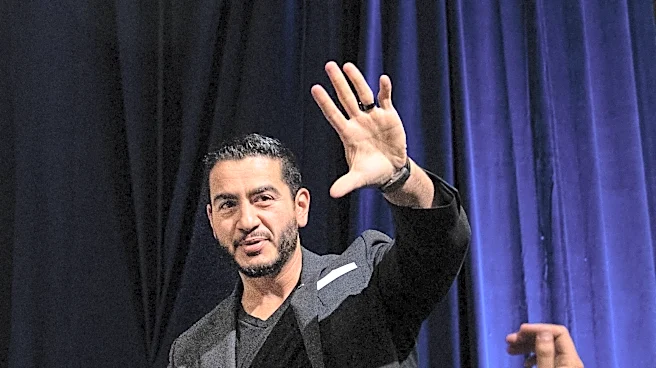
Twitter) that he no longer believes the official 9/11 story, citing inconsistencies such as the discovery of intact paper passports amidst the destruction and the collapse of WTC7. He suggested that it is time to investigate who benefited from the attacks, implying government deception. This comes as Michigan Democratic Senate candidate Abdul El-Sayed is scheduled to appear on a panel with Uygur and Zaid Shakir, a cleric who has also called for an 'examination' of the 9/11 narrative. El-Sayed has faced criticism for his continued association with Uygur's nephew, Hasan Piker, and for his own deleted tweets that drew comparisons between the 9/11 response and the COVID-19 pandemic, and suggested America's response to 9/11 was worse than the attacks themselves.
Why It's Important?
The controversy surrounding Cenk Uygur's 9/11 comments and his association with other figures questioning the official narrative highlights a broader issue of trust in government and media, particularly concerning historical events of national significance. For political figures like Abdul El-Sayed, appearing alongside individuals who promote such views can carry significant political risk, potentially alienating mainstream voters and raising questions about their judgment and alignment with established facts. This situation underscores the challenges political candidates face in navigating public discourse, especially when past statements or associations of their allies come under fire. The debate also touches on the role of independent media and commentators in questioning official accounts, and the fine line between critical inquiry and the promotion of conspiracy theories. The implications extend to how political campaigns manage endorsements and appearances, and the potential for such controversies to impact public perception and electoral outcomes.
What's Next?
The upcoming panel discussion featuring Abdul El-Sayed, Cenk Uygur, and Zaid Shakir is likely to draw further attention and criticism, especially given its proximity to the 25th anniversary of the 9/11 attacks. Political observers and opponents will likely monitor El-Sayed's participation and his response to questions regarding his co-panelists' views. The controversy could intensify pressure on El-Sayed to either distance himself from these figures or more clearly articulate his own stance on the 9/11 events. For Cenk Uygur, these renewed discussions may further solidify his image among his supporters as a critical voice, while simultaneously drawing more condemnation from those who view his comments as promoting harmful conspiracy theories. The broader impact could include increased scrutiny on public figures who engage with or appear alongside individuals known for controversial historical interpretations, potentially influencing future political endorsements and event programming.
Beyond the Headlines
This situation delves into the complex interplay between free speech, journalistic responsibility, and political accountability. While Cenk Uygur, as a journalist, exercises his right to express skepticism, the nature of his claims regarding 9/11 touches upon a deeply sensitive national trauma. The controversy raises questions about the impact of such narratives on public understanding of history and the potential for them to erode trust in institutions. For political candidates, the decision to associate with figures holding controversial views can be a strategic calculation, weighing the support of a particular base against the risk of alienating broader demographics. This incident also highlights the persistent challenge of combating misinformation and conspiracy theories in the digital age, where platforms like X allow for rapid dissemination of alternative narratives, regardless of their factual basis. The long-term implications could include a continued polarization of public discourse and increased difficulty in establishing a shared understanding of historical events.