







What's Happening?
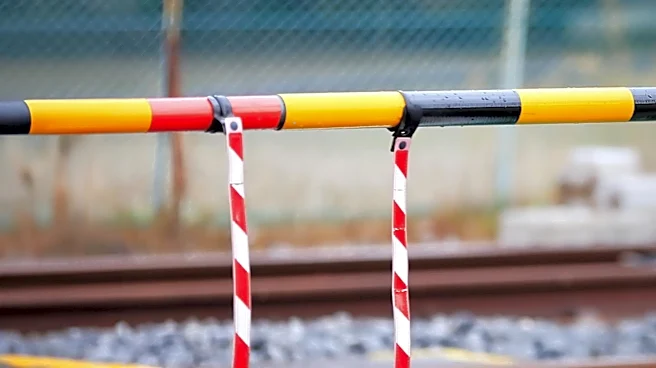
South Lyon leaders are pressing CSX to address the deteriorating condition of railroad crossings on Pontiac Trail/Lafayette Street and 10 Mile/Lake Street. Drivers in South Lyon are encountering lifting boards and holes at these crossings, which are owned
by CSX. Mayor Steve Kennedy stated that these two crossings handle the heaviest traffic volume in the area, far exceeding their original design capacity. The city has been in contact with CSX regarding maintenance or replacement of the materials and has sought assistance from State Rep. Jason Morgan. Funding has been identified as a central obstacle, with both the railroad and the city citing budget limitations for the estimated upgrade costs. CSX maintains that the crossings are regularly inspected and deemed safe, but an inspection is expected in the coming weeks following inquiries.
Why It's Important?
The deteriorating condition of railroad crossings in South Lyon poses significant safety risks and logistical challenges for residents and commuters. Damaged crossings can lead to vehicle damage, potential accidents, and disruptions to traffic flow, impacting daily life and local commerce. The dispute over funding highlights a common issue in infrastructure maintenance, where responsibility and financial capacity between private entities (like CSX) and local governments often clash. The high traffic volume on these particular crossings exacerbates the problem, indicating that the existing infrastructure is no longer adequate for current demands. State Rep. Jason Morgan's involvement underscores the political and public safety dimensions of the issue, as local leaders seek higher-level intervention to secure necessary repairs and ensure public safety.
What's Next?
Following inquiries, an inspection of the railroad crossings by CSX is expected in the coming weeks. This inspection will likely assess the current condition of the crossings and inform potential next steps. State Rep. Jason Morgan is working with local leadership and CSX to find a long-term solution, aiming for repairs and replacements that offer lasting stability. The primary challenge remains securing funding for the necessary upgrades, as both CSX and the city have indicated budget constraints. Continued negotiations and advocacy from local and state officials will be crucial in resolving this infrastructure issue and ensuring the safety of South Lyon's residents.
Beyond the Headlines
The situation in South Lyon with the deteriorating railroad crossings reflects a broader national challenge concerning aging infrastructure and the complex interplay between private corporations and public entities. Many railroad lines across the U.S. are privately owned, creating a unique dynamic where public safety and private operational costs often conflict. The issue of funding, cited by both CSX and the city, is a recurring theme in infrastructure debates, highlighting the need for innovative financing models or clearer regulatory frameworks that mandate maintenance standards. This scenario also underscores the increasing strain on existing infrastructure due to population growth and increased traffic, necessitating a re-evaluation of design capacities and long-term planning. The involvement of state representatives indicates that such local issues often escalate to higher political levels, emphasizing the interconnectedness of local infrastructure with state-level governance and funding priorities.