





What's Happening?
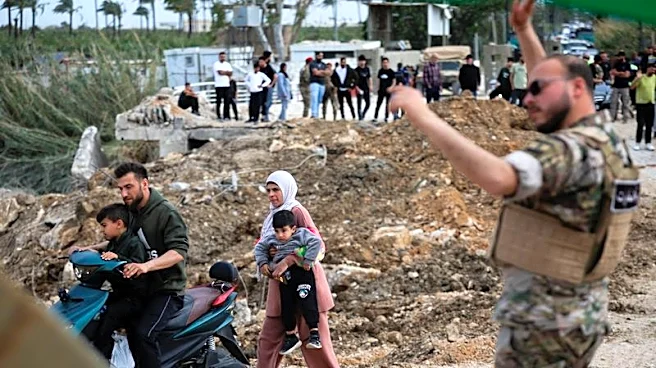
Following a ceasefire agreement between Israel and Hezbollah, displaced Lebanese residents have begun returning to their villages. The ceasefire, which took effect on April 17, 2026, has allowed many who fled the conflict to return to their homes, although
they are met with the devastation left by the fighting. The conflict had resulted in significant destruction, with many buildings in southern Lebanon, including in areas like Dahiyeh and Kfar Roumman, heavily damaged by Israeli airstrikes. The returnees are navigating through rubble and destroyed infrastructure as they attempt to rebuild their lives. The ceasefire has brought a temporary halt to hostilities, providing a window for humanitarian efforts and reconstruction.
Why It's Important?
The ceasefire is crucial as it provides a much-needed respite for civilians affected by the conflict, allowing them to return to their homes and begin the process of rebuilding. This development is significant for regional stability, as prolonged conflict between Israel and Hezbollah has broader implications for Middle Eastern geopolitics. The return of displaced persons is a positive step towards normalcy, but the extensive damage highlights the challenges ahead in terms of reconstruction and reconciliation. The ceasefire also opens up opportunities for international aid organizations to provide necessary assistance to those affected by the conflict, potentially easing humanitarian concerns.
What's Next?
The immediate focus will likely be on humanitarian relief and rebuilding efforts in the affected areas. International organizations and local authorities may coordinate to provide aid and support to the returning residents. The sustainability of the ceasefire will be closely monitored, as any resurgence in hostilities could reverse the progress made. Diplomatic efforts may intensify to ensure the ceasefire holds, with potential involvement from international mediators to facilitate long-term peace talks. The situation remains fragile, and the response from both local and international stakeholders will be critical in determining the future stability of the region.