

What's Happening?
The International Finance Corp. (IFC), the private lending arm of the World Bank, has reportedly withdrawn a $20 million loan to Brazil’s Grupo Agronorte. This decision follows accusations from environmental groups that the company, which operates a mill processing
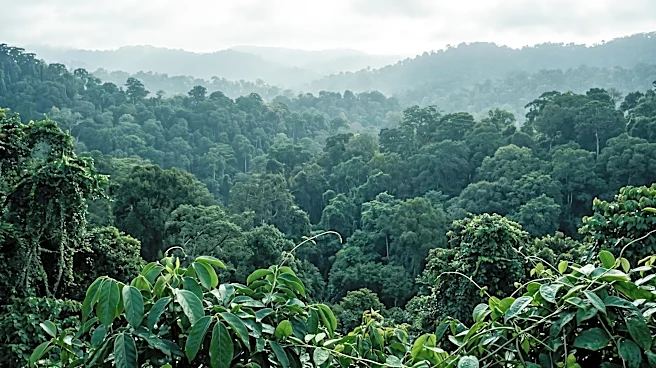
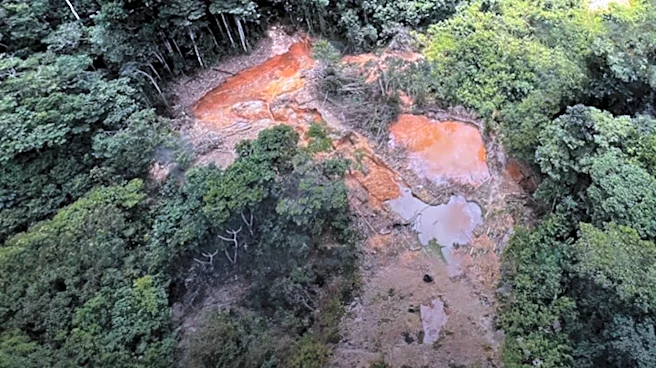
soya for farmed animals, is linked to deforestation. Over 100 advocacy and Indigenous groups, organized by the Stop Financing Factory Farming coalition, had urged the IFC to cancel the loan, initially announced in March 2026. These groups argued that the mill would increase pressure for soya production in regions like the Amazon and Cerrado, where plantations often contribute to illegal deforestation. The IFC has acknowledged that Agronorte lacks systems to ensure its soybeans are not sourced from illegally deforested land.
Why It's Important?
This withdrawal signifies a growing pressure on international financial institutions to consider the environmental and social impacts of their investments, particularly in sectors linked to deforestation and industrial agriculture. For the U.S., this event highlights the global interconnectedness of supply chains and the environmental consequences of demand for animal feed, much of which is used to produce meat consumed worldwide. It also underscores the influence of advocacy groups in holding powerful financial entities accountable. The precedent set by the IFC's decision could lead to increased scrutiny of other investments in the animal agriculture sector, potentially impacting U.S. companies involved in global food production or those sourcing ingredients from regions prone to deforestation. This could drive a shift towards more sustainable sourcing practices and greater transparency in agricultural supply chains.
What's Next?
The withdrawal of this loan could prompt other development banks and financial institutions to re-evaluate their investments in industrial animal agriculture, especially those with potential links to deforestation. The Stop Financing Factory Farming coalition continues to monitor other loans, such as a $150 million IFC loan to New Hope Singapore Pte. Ltd. for expanding animal feed production across several Asian countries. This ongoing scrutiny suggests a trend towards more environmentally conscious lending practices. Companies involved in animal feed production and animal agriculture globally may face increased pressure to implement robust systems for verifying the origin of their raw materials and ensuring they are not contributing to illegal deforestation. This could lead to higher compliance costs and a push towards more sustainable and transparent supply chains.
Beyond the Headlines
This incident reveals a deeper tension between economic development and environmental protection, particularly in regions rich in biodiversity like the Amazon. The demand for animal feed, driven by global meat consumption, creates significant pressure on land use, often leading to deforestation and infringing upon Indigenous territories. The IFC's decision, while a victory for environmental groups, also highlights the complex challenge of balancing agricultural expansion with conservation efforts. It raises ethical questions about the responsibility of financial institutions in mitigating the indirect environmental impacts of their investments. This event could accelerate the broader conversation about the true cost of industrial agriculture and the need for systemic changes towards more sustainable food systems that respect both ecological limits and human rights.