
What's Happening?
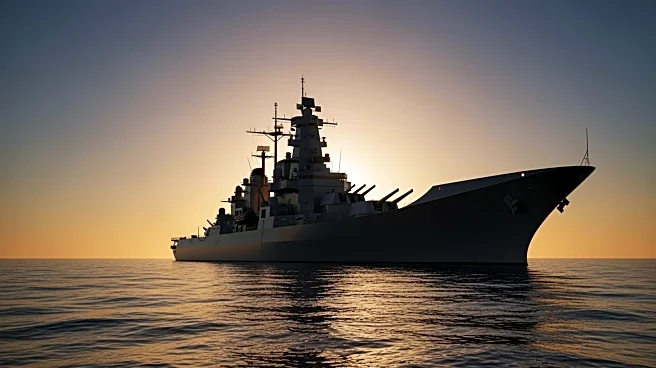
President Donald Trump has unveiled plans for the U.S. Navy to construct a new class of warship, referred to as a 'battleship', as part of a broader initiative to establish a 'Golden Fleet'. The announcement
was made at Trump's Mar-a-Lago resort in Florida. The first ship, named the USS Defiant, is expected to surpass the size and power of the World War II-era Iowa-class battleships. It will be equipped with advanced technologies such as hypersonic missiles, nuclear cruise missiles, rail guns, and high-powered lasers, although these technologies are still under development by the Navy. This announcement follows the Navy's recent decision to abandon plans for a new small warship due to delays and cost overruns, opting instead for a modified Coast Guard cutter. The Navy has faced challenges in implementing some of the technologies proposed for the new ship, such as the railgun, which was abandoned after significant investment. The design phase for the new ship is underway, with construction anticipated to begin in the early 2030s.
Why It's Important?
The introduction of a new class of warship signifies a major shift in U.S. naval strategy, potentially impacting global naval power dynamics. The proposed 'Golden Fleet' could enhance the U.S. Navy's capabilities, reinforcing its presence and influence in international waters. However, the development and deployment of such advanced technologies raise questions about feasibility, cost, and compliance with international treaties, particularly those concerning nuclear weapons. The initiative reflects President Trump's ongoing interest in military modernization and aesthetics, as he has previously expressed preferences for certain naval technologies and designs. The success of this project could bolster U.S. defense capabilities, but it also poses significant challenges in terms of technological development, budget management, and international diplomacy.
What's Next?
The next steps involve the detailed design and planning phases for the new warship, with construction slated to begin in the early 2030s. The Navy will need to address technological hurdles, particularly in developing and integrating the advanced weaponry and systems proposed for the USS Defiant. Additionally, the project will require substantial funding and resources, necessitating approval and support from Congress. The initiative may also prompt reactions from international stakeholders, especially concerning the deployment of nuclear-capable technologies. As the project progresses, it will be crucial for the Navy to balance innovation with practicality, ensuring that the new class of ships meets strategic needs without exceeding budgetary constraints.
Beyond the Headlines
The development of the 'Golden Fleet' could have broader implications for U.S. military policy and international relations. The emphasis on advanced weaponry and aesthetics reflects a shift towards a more assertive naval posture, potentially influencing global maritime security dynamics. The project also highlights the challenges of modernizing military forces in an era of rapid technological advancement and fiscal constraints. Furthermore, the initiative may spark debates about the role of nuclear weapons in naval strategy and the ethical considerations of deploying such capabilities. As the U.S. pursues this ambitious project, it will need to navigate complex legal, diplomatic, and technological landscapes to achieve its objectives.